The internet is full of business proposal templates — free ones, premium ones, and everything in between. But the real question isn’t which costs less. It’s which one actually helps you win the deal. Here’s an honest breakdown of what you get with each, and how to choose wisely.
What Free Business Proposal Templates Actually Give You
Free templates have come a long way. A decade ago, “free” meant a basic, unbranded slide with a white background and a default font. Today, platforms like SlideEgg offer free business proposal PowerPoint templates that are professionally designed, fully editable, and available in both PowerPoint and Google Slides format.
So what do you genuinely get with a free template? You get a solid structural foundation. Most free proposal templates include the essential slides — a cover, an executive summary, a problem statement, a solution overview, a scope of work, a pricing table, and a call-to-action. That’s enough to build a complete, presentable proposal for most standard pitches.
The design quality on free templates varies. Some are polished and modern. Others are functional but plain. The key variable isn’t cost — it’s the source. A free template from a reputable design platform will consistently outperform a paid one from a low-quality marketplace.
You can explore SlideEgg’s full range of business proposal PowerPoint templates, including the free-tier options, to get a sense of what’s available before committing to anything premium.
What Paid Business Proposal Templates Add
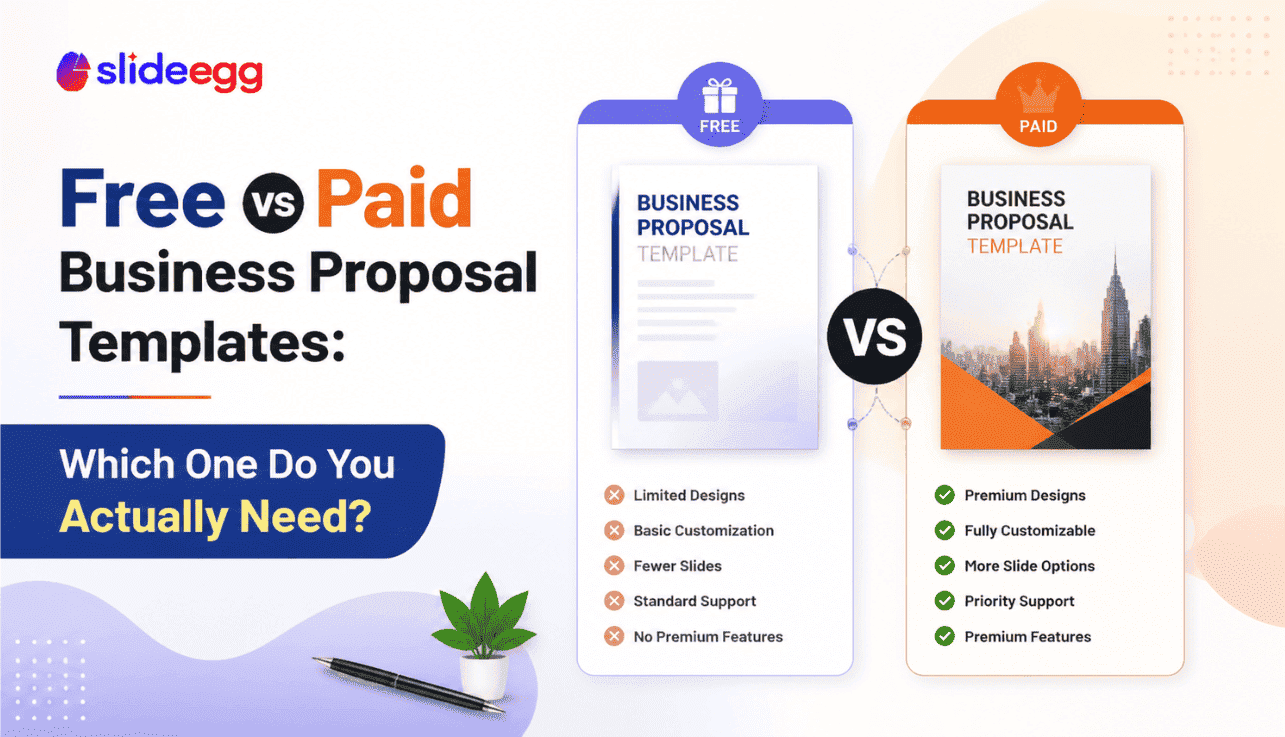
Premium templates go beyond structure. Where a free template gives you the skeleton of a proposal, a paid template is often designed around a specific industry, tone, or audience type. You’re not just getting more slides — you’re getting a more tailored experience.
Specifically, paid templates tend to offer more custom slide variants (multiple layout options for the same section), richer infographic elements like editable charts and icon sets, more sophisticated typography pairings, and additional slides for niche use cases like partnership proposals, grant requests, or investor decks. Some premium tiers also come with animated transitions and export-ready PDF versions.
The other significant advantage of premium templates is consistency. When a design team has invested serious effort into a premium pack, every slide follows the same visual grammar — the same spacing, the same colour logic, the same icon style. That consistency is harder to achieve in free templates, which are sometimes assembled from mixed sources.
Head-to-Head Comparison
| Feature | Free Templates | Paid / Premium Templates |
| Core slide structure | ✅ Included | ✅ Included + more variants |
| Design polish | Good (varies by source) | High, consistent throughout |
| Editable in PowerPoint & Google Slides | ✅ Yes | ✅ Yes |
| Industry-specific layouts | Limited | ✅ Often available |
| Infographic & icon variety | Basic | Extensive |
| Slide count | 8–15 slides typical | 20–50+ slides typical |
| Best for | Freelancers, quick pitches, standard proposals | Agencies, high-stakes pitches, enterprise sales |
When a Free Template Is the Right Call
Free templates are genuinely sufficient in a surprisingly wide range of situations. If you’re a freelancer putting together a project proposal for a single client, a well-chosen free template will look professional and close the deal just as effectively as a premium one. The client isn’t evaluating your template — they’re evaluating your solution and your pricing.
Free templates also make sense when you’re experimenting with proposal formats. If you’re not yet sure which slide structure works best for your pitch style, downloading three or four free templates and testing them is far smarter than buying a premium pack based on a thumbnail.
And if you’re a startup with limited resources, or a team that rarely sends formal proposals, there’s no compelling reason to pay for premium. The ROI simply isn’t there when a free template does 90% of the job.
Good to know: Even with a free template, you can significantly elevate how it looks by customizing the color palette to match your brand, replacing placeholder icons with your own, and adding your logo and a professional cover photo. The template is the structure — your brand is the finish.
When It’s Worth Investing in a Premium Template
The calculus shifts when the stakes are high. If you’re pitching a six-figure contract, presenting to a board, or competing against polished agency proposals, a premium template earns its cost back in a single won deal. In high-stakes environments, visual quality is part of the credibility signal — a sloppy deck can undermine an otherwise strong pitch.
Premium also makes sense if you’re sending proposals at volume. Sales teams that build and send dozens of proposals a month benefit enormously from a comprehensive premium pack. Having 40+ slides in a single, cohesive system means any rep can assemble a custom proposal in under an hour without needing design support.
Agencies and design-conscious businesses often choose premium simply because brand consistency matters to them. A premium template system lets them maintain visual standards across every client touchpoint.
If you want to see how a well-structured proposal deck is built before choosing a template tier, our guide on Business Proposal Slide Structure: 11 Slides That Win Deals walks through every essential section so you can evaluate templates more precisely.
The Middle Ground: Upgrading a Free Template
There’s a third option many professionals overlook: starting with a free template and upgrading it yourself. This approach works especially well if you have some familiarity with PowerPoint or Google Slides. Take a structurally sound free template, swap the font to match your brand, update the colour scheme, add your logo to the master slide, and replace the stock icons with a consistent icon set.
The result is a semi-custom proposal deck that looks premium but costs nothing. This strategy is particularly effective for small teams and individual consultants who have the time to invest in one well-crafted template they’ll reuse across many pitches.
Which SlideEgg Templates Should You Start With?
SlideEgg’s business proposal template collection includes both free and premium options across a range of styles — from minimal and corporate to bold and creative. If you’re not sure where to start, our roundup of the 12 Best Business Proposal PPT Templates for 2026 covers the top picks from across both tiers, so you can compare them side by side and choose based on your specific use case.
Whether you download a free template today or invest in a premium pack, what matters most is that your proposal looks intentional, reads clearly, and makes a compelling case. The best template is the one that gets out of the way and lets your pitch do the work.
Ready to Find Your Template?
Browse SlideEgg’s full collection of free and premium business proposal PowerPoint templates — editable in both PowerPoint and Google Slides.
Frequently Asked Questions
Are free business proposal templates professional enough to use with clients?
Yes — when sourced from a quality design platform. Free templates from SlideEgg are professionally designed and fully editable, making them suitable for client-facing proposals across most industries and deal sizes.
What’s the main difference between free and paid proposal templates?
Free templates typically offer a core set of essential slides with solid design quality. Paid templates add more slide variants, industry-specific layouts, richer infographic elements, and higher visual consistency across a larger slide count.
Can I customize a free business proposal template to match my brand?
Absolutely. All SlideEgg templates — free and premium — are fully editable in PowerPoint and Google Slides. You can update colours, fonts, logos, icons, and placeholder text to match your brand in minutes.