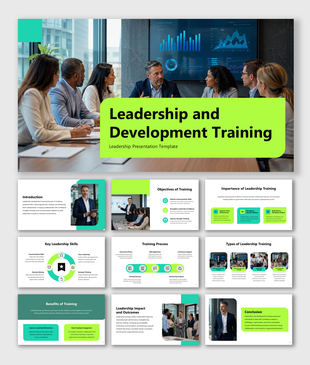
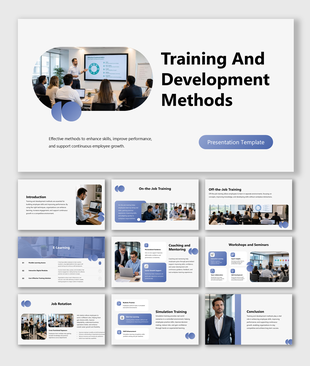
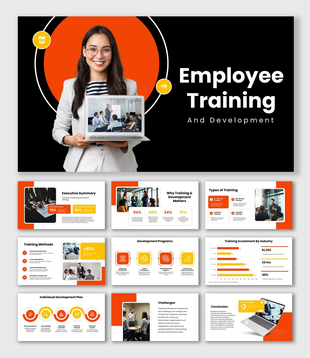
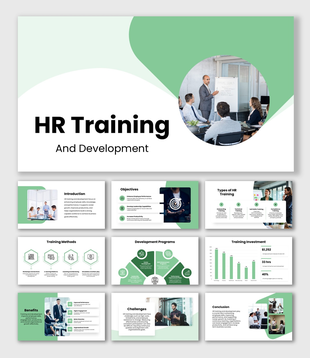
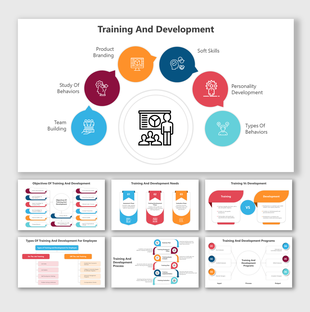
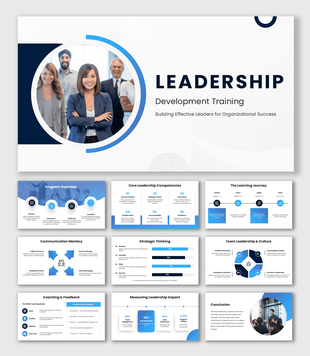
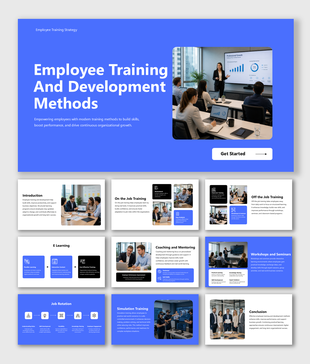
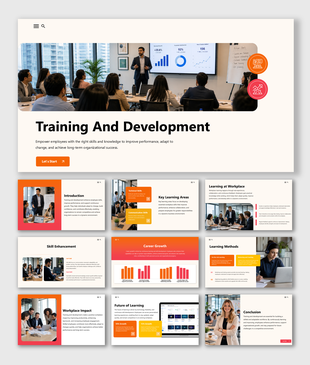
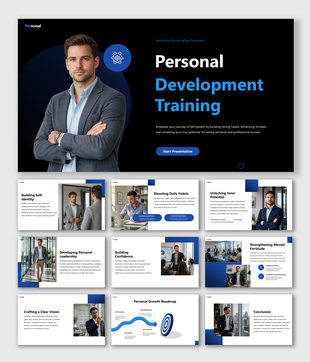
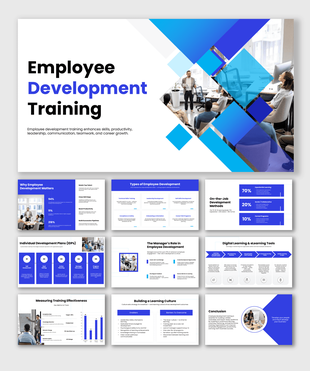
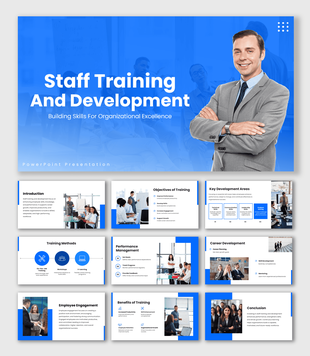
Great managers are not born — they are developed. And developing them starts with a presentation that makes the case for structured management training clearly, compellingly, and with the kind of data that organizational leaders cannot ignore. This Management Training And Development template is built for HR directors, learning and development professionals, corporate trainers, business school educators, and organizational development consultants who want to present a complete management development strategy that connects leadership capability directly to business performance.
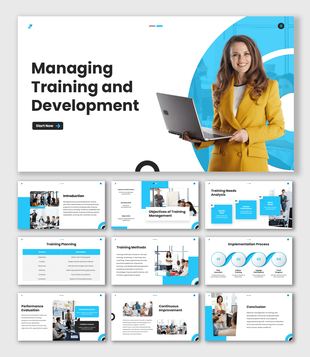
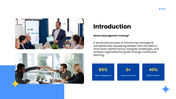
What makes this deck powerful is how it bridges the human and commercial dimensions of management development, showing not just what managers learn, but what that learning actually delivers for employees and organizations alike. It opens with a crisp introduction to management training that defines the discipline as a structured process for enhancing managerial competencies, immediately backed by three headline impact figures covering engagement lift, promotion speed, and retention improvement that set a compelling performance context from the very first slide.
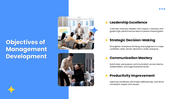
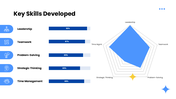
The objectives of management development slide maps four strategic goals that every effective program must address: leadership excellence for cultivating visionary, high-performance team leaders; strategic decision-making for building analytical confidence under pressure; communication mastery for connecting clearly across teams and stakeholders; and productivity improvement for eliminating workflow inefficiencies that drain organizational output. The key skills developed slide follows with a visual skills chart covering five core competencies: leadership, teamwork, problem-solving, strategic thinking, and time management, each rated by development impact percentage, giving L&D teams a data-backed framework for prioritizing training investment.
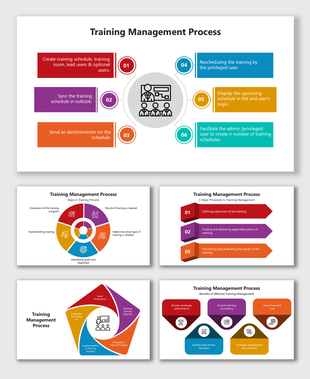
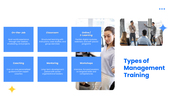
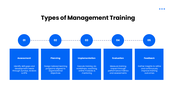
The types of management training slide presents six delivery formats that modern organizations use to develop managers at every level — on-the-job learning through role rotation and shadowing, structured classroom sessions, flexible online and e-learning modules, one-on-one coaching, senior mentoring relationships, and intensive skills workshops. The management training process slide maps the complete five-stage implementation cycle — assessment, planning, implementation, evaluation, and feedback — with a clear description of what each stage involves and why skipping any one of them undermines the entire program's effectiveness.
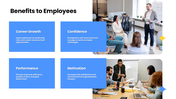
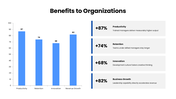
The benefits to employees slide addresses what individual managers actually gain from structured development career growth pathways, stronger self-confidence, measurable performance improvement, and higher motivation and job satisfaction, framing training as an investment in people, not just a corporate checkbox. The benefits to organizations slide, then make the business case with four impact scores — productivity, retention, innovation, and revenue growth — each supported by a percentage figure that shows the measurable organizational return on management development investment.
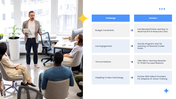
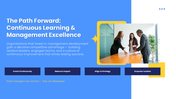
The challenges and solutions slide rounds out the strategic content by honestly addressing four real-world obstacles that derail management training programs — budget constraints, low engagement, time limitations, and the pressure to adapt to new technology — each paired with a specific, practical solution, including blended learning, gamification, micro-learning modules, and AI-driven adaptive training platforms. The deck closes with an inspiring path forward slide built around four strategic principles — invest continuously, measure impact, align to strategy, and empower leaders — leaving audiences with a clear framework for sustaining a culture of management excellence long after the presentation ends.
Everything is fully customizable skills data, training types, process stages, impact scores, challenge solutions, and color schemes — no design experience needed. Download the Management Training and Development PPT today and build the case for leadership development that your organization cannot afford to delay.


 Canva
Canva