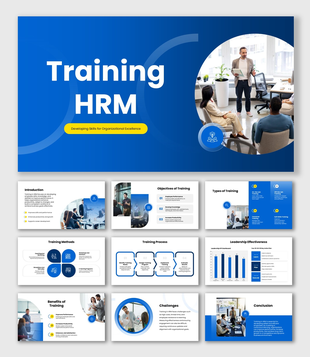
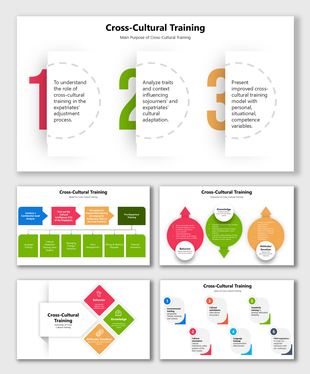
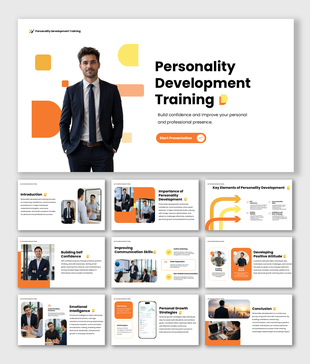
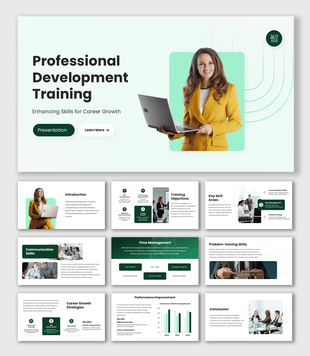
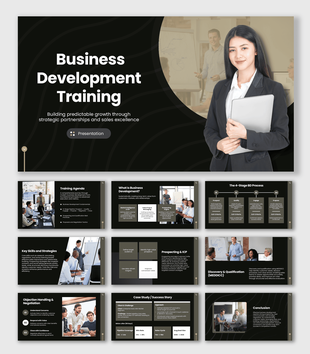
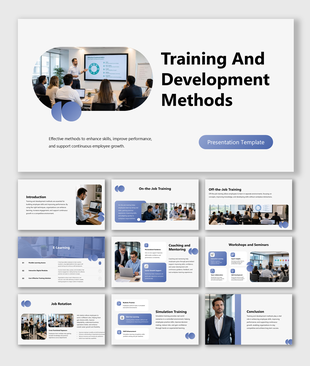
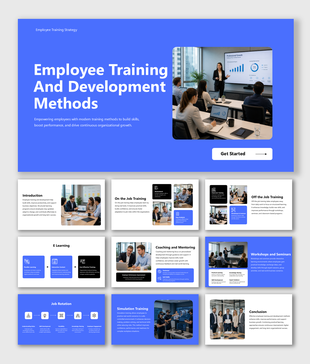
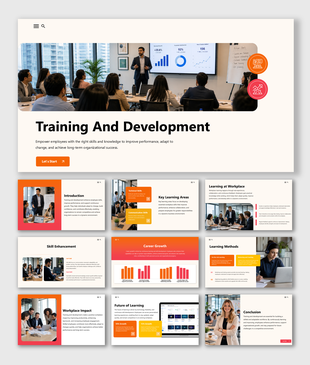
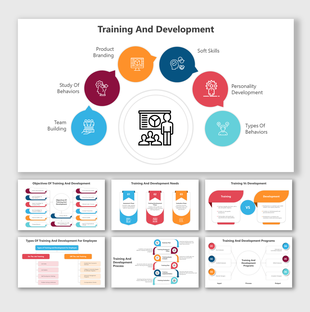
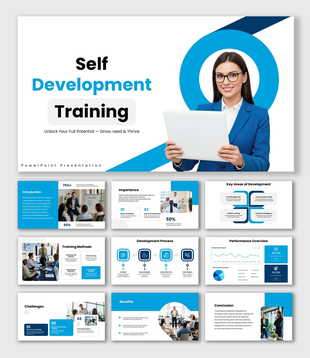
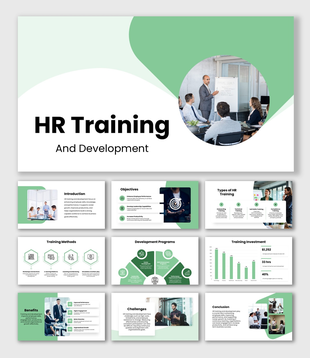
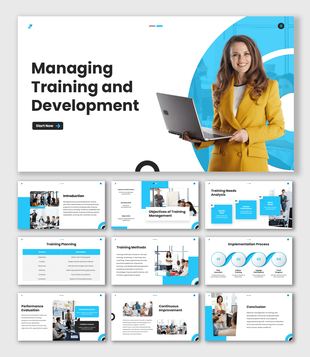
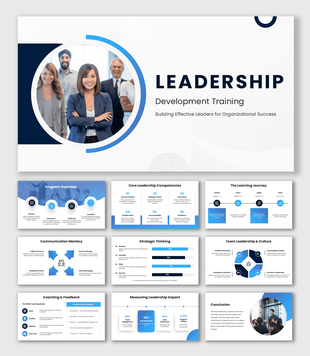
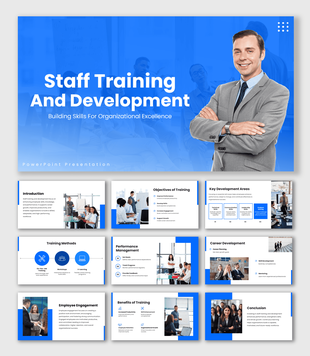
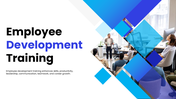
Investing in your people is the most reliable growth strategy any organization can pursue — and presenting that investment with clarity and data is what turns good intentions into approved budgets and real programs. This Employee Development Training template is a comprehensive, insight-driven deck built for HR leaders, learning and development professionals, organizational development consultants, corporate trainers, and business school educators who want to make a compelling case for structured employee development and present a complete framework for how it works in practice.
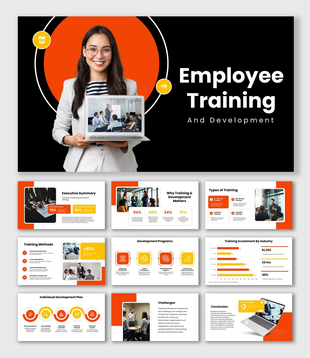
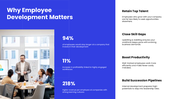
What sets this deck apart is how seriously it takes the subject, combining powerful benchmark statistics, proven learning models, practical implementation tools, and honest cultural analysis into a presentation that works equally well for a boardroom pitch, an L&D team planning session, or an academic module on workforce development. It opens with a sharp why employee development matters slide anchored in three headline figures: the overwhelming majority of employees who say they would stay longer at companies that invest in their growth, the profitability lift linked to highly engaged workforces, and the dramatic revenue per employee advantage that companies with strong learning cultures consistently generate.
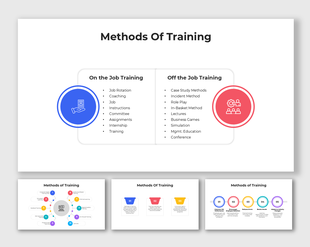
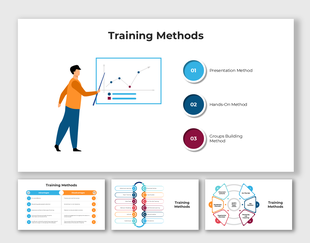
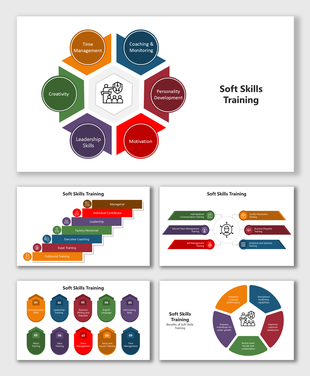
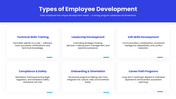
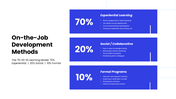
The types of employee development slide maps six distinct development tracks that a well-rounded program must address: technical skills training for role-specific tools and certifications, leadership development for strategic thinking and executive presence, soft skills for communication and emotional intelligence, compliance and safety training, onboarding and orientation, and long-term career path programs aligned to both individual aspirations and business succession needs. The on-the-job development methods slide introduces the globally recognized 70-20-10 learning model, breaking down how experiential learning through stretch assignments and job rotation, social learning through mentoring and peer collaboration, and formal programs through classroom and eLearning each contribute differently to sustained capability development.
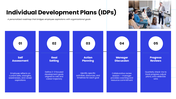
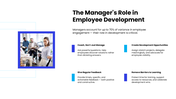
The individual development plans slide presents a clean five-stage IDP framework self-assessment, goal setting, action planning, manager discussion, and progress reviews, giving HR teams and managers a replicable structure for personalizing development at scale without losing rigor or alignment to organizational goals. The manager's role in employee development slide addresses one of the most underestimated levers in any L&D strategy — showing four specific behaviors that separate managers who grow their people from those who simply manage them: coaching through questions, creating stretch opportunities, giving regular actionable feedback, and actively removing barriers to learning.
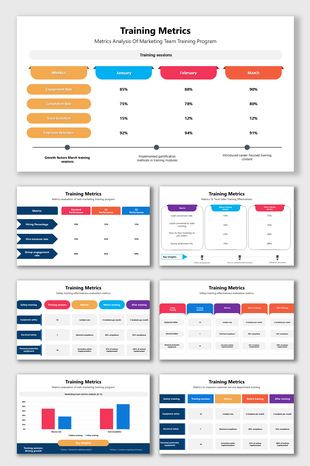
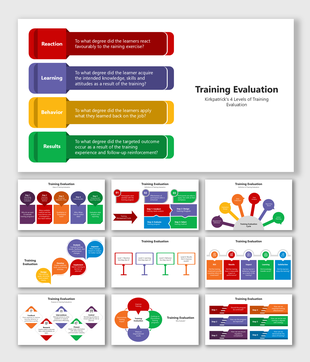
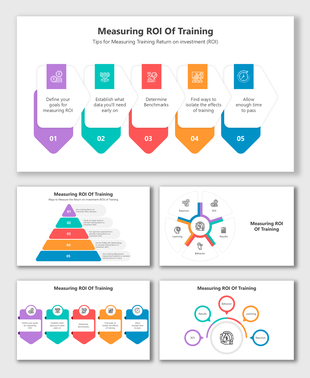
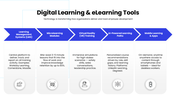
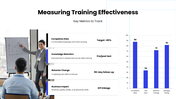
The digital learning and eLearning tools slide maps five technology platforms reshaping how organizations deliver and track development learning management systems for centralized delivery and reporting, microlearning modules for bite-sized in-the-flow-of-work lessons, virtual reality for immersive high-stakes scenario training, AI-powered personalized learning paths, and mobile learning for anytime access, especially for deskless workers. The measuring training effectiveness slide defines four key metrics every L&D team must track: completion rate, knowledge retention through assessment score improvement, behavior change as skills applied on the job, and business impact tied to KPIs like revenue, quality, and productivity.
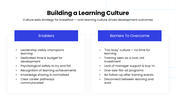
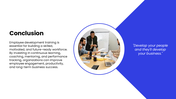
The building a learning culture slide closes the strategic content with an honest two-column analysis mapping the enablers that make learning cultures thrive, including leadership visibility, dedicated time and budget, psychological safety, and clear career pathways, against the barriers that silently undermine them, from the "too busy" culture and lack of manager buy-in to one-size-fits-all programs and the absence of post-training follow-up. A powerful conclusion ties the full narrative together with a memorable statement that frames employee development not as an HR initiative but as a direct driver of business growth.
Everything is fully customizable: learning model data, IDP stages, digital tool descriptions, metric targets, culture enablers, color schemes, and layout elements. No design experience needed. Download the Employee Management PPT Development Training PPT today and present a workforce development strategy that leadership will fund and employees will genuinely value.

 Canva
Canva