
You’ve got a blank deck open and a meeting on the calendar, and the honest question isn’t “how do I design this,” it’s “what actually goes in here.” Get the slide order wrong and the first question from the room is usually “wait, where’s the ask” or “you didn’t show me the numbers,” and by then you’ve lost the thread.
There’s a standard business plan presentation format that works because it mirrors how someone actually evaluates a business: what it is, why it matters, whether it can make money, and what you need from them. Here’s that order for your business plan presentation slides, one at a time, with what actually belongs on each one, not just the slide’s name.
The Short Answer
A business plan presentation typically needs 10 slides, in this order: executive summary, the problem, the solution, market size and target customer, business model, go-to-market plan, competitive landscape, financial projections, team, and the ask. An appendix is optional, for backup detail you don’t want eating into your core time.
The Slide-by-Slide Breakdown
1. Executive Summary
A one-slide preview of the whole deck: what you do, the problem, the market, and the ask, in a few lines each. Someone who only sees this slide should still know what you’re asking for. Write it last, even though it’s shown first, you can’t summarize an argument you haven’t finished making.
2. The Problem
Name the specific pain point your target customer has today, backed by one concrete data point or a short real scenario. Skip industry-wide framing like “the market is broken,” anchor it in the exact person or business that feels this problem, so the room can picture them.
3. The Solution
What you built and how it solves the problem from the previous slide, described in language a non-expert in the room could repeat back afterward. One visual of the product or workflow does more work here than another paragraph of description.
4. Market Size and Target Customer
Show the total addressable market broken down credibly, a top-down TAM figure next to a bottom-up estimate of who you can actually reach first, rather than one inflated number. Name what your first paying customer actually looks like, not just an industry category.
5. Business Model
How money actually comes in: pricing, unit economics, and who pays. If you have real numbers, even early or small ones, this is the slide to show them, not the financial projections slide, which is about the future, not what’s already happening.
6. Go-to-Market Plan
How you’ll reach the customer you just described: the specific channels, the first three to five concrete actions, and, if you’re past zero, what’s already worked so far. Vague statements like “social media and word of mouth” read as a plan that hasn’t been thought through yet.
7. Competitive Landscape
“We have no competition” reads as a red flag, not a strength, it usually means the category hasn’t been researched. Name real competitors. A simple two-by-two or comparison table showing where you’re genuinely different beats a paragraph of adjectives about being “innovative.”
8. Financial Projections
A three-to-five-year revenue and cost forecast with the assumptions visible, not just a chart trending up and to the right. Anyone evaluating a funding ask reads the assumptions behind the number before they trust the number itself.
9. Team
Who’s building this and why they’re credible for this specific problem, one line each. Skip full resumes, relevance to this business beats years of tenure at an unrelated company, and the room can always ask for more detail if they want it.
10. The Ask
Exactly what you want, funding amount, a loan, formal approval, or specific resources, and what it buys you over the next 12 to 18 months. This is the slide most first-time decks either bury on the last page or skip outright, which forces the room to ask for it directly instead of you controlling how it’s framed.
Optional: Appendix
Reserve this for backup detail you don’t want eating into your core presentation time, a deeper financial model, additional market research, or answers to questions you expect but that don’t need to interrupt the main story.
Mistakes From Getting the Order Wrong
Opening with company history instead of the problem
Investors and internal approvers are there to evaluate the business’s future, not its founding story. Save that detail for a single line on the team slide.
No clear ask, or the ask buried at the very end
If the room has to ask “so what do you actually need from us,” the deck did its job in reverse.
Financial projections with no visible assumptions
A big number nobody can trace back to an input reads as invented, even when it isn’t.
Treating the team slide like a set of resumes
One relevant line per person tells the room more than a full career history nobody asked for.
For the complete process, not just the slide order, but how to build, source, and rehearse the deck end to end, our full guide to creating a winning business plan presentation covers the rest. And if you’re not actually sure this is the deck you need in the first place, Business Plan vs Business Strategy Presentation has the one-question test to check before you build either one.
Building From a Template
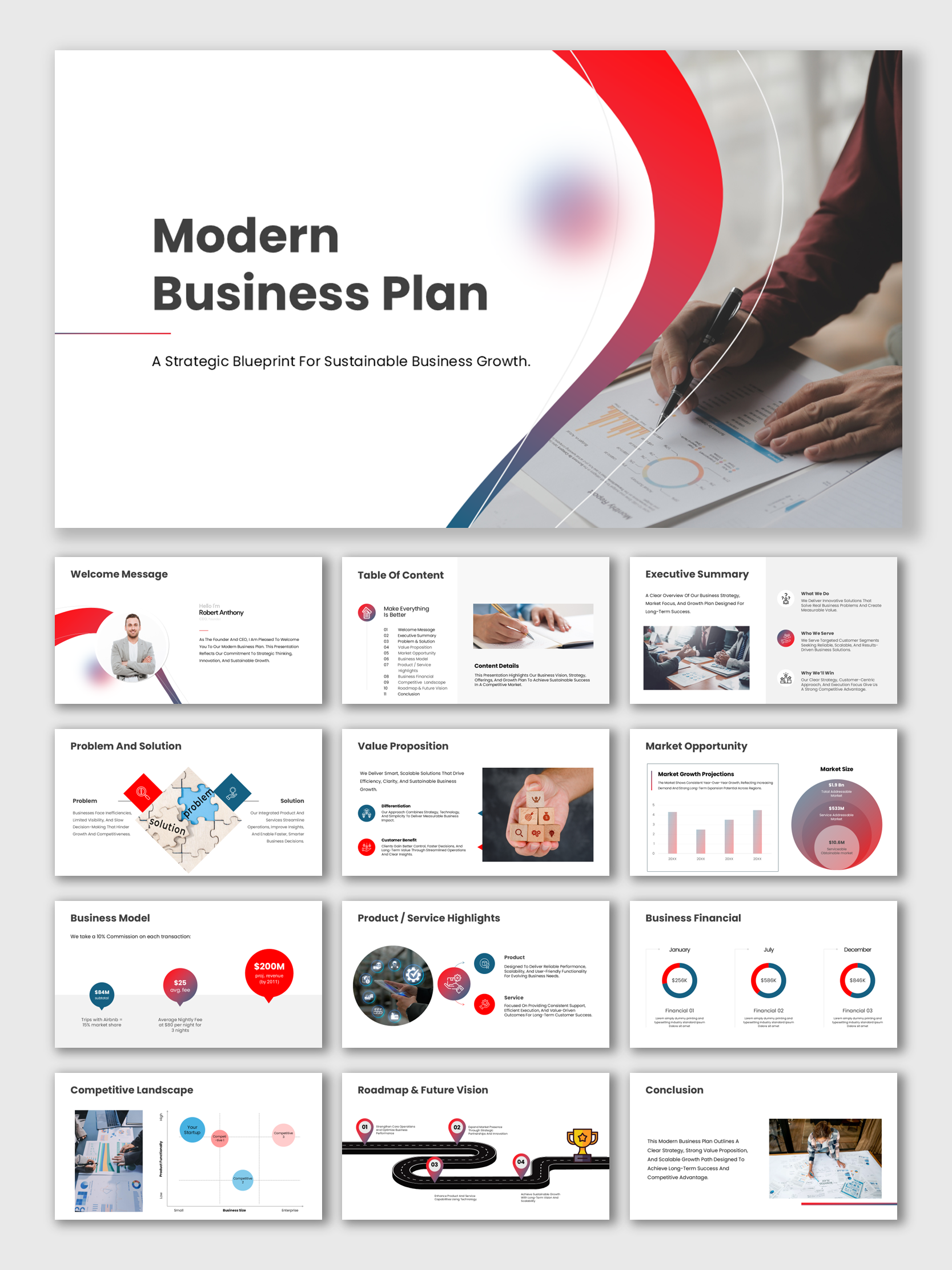
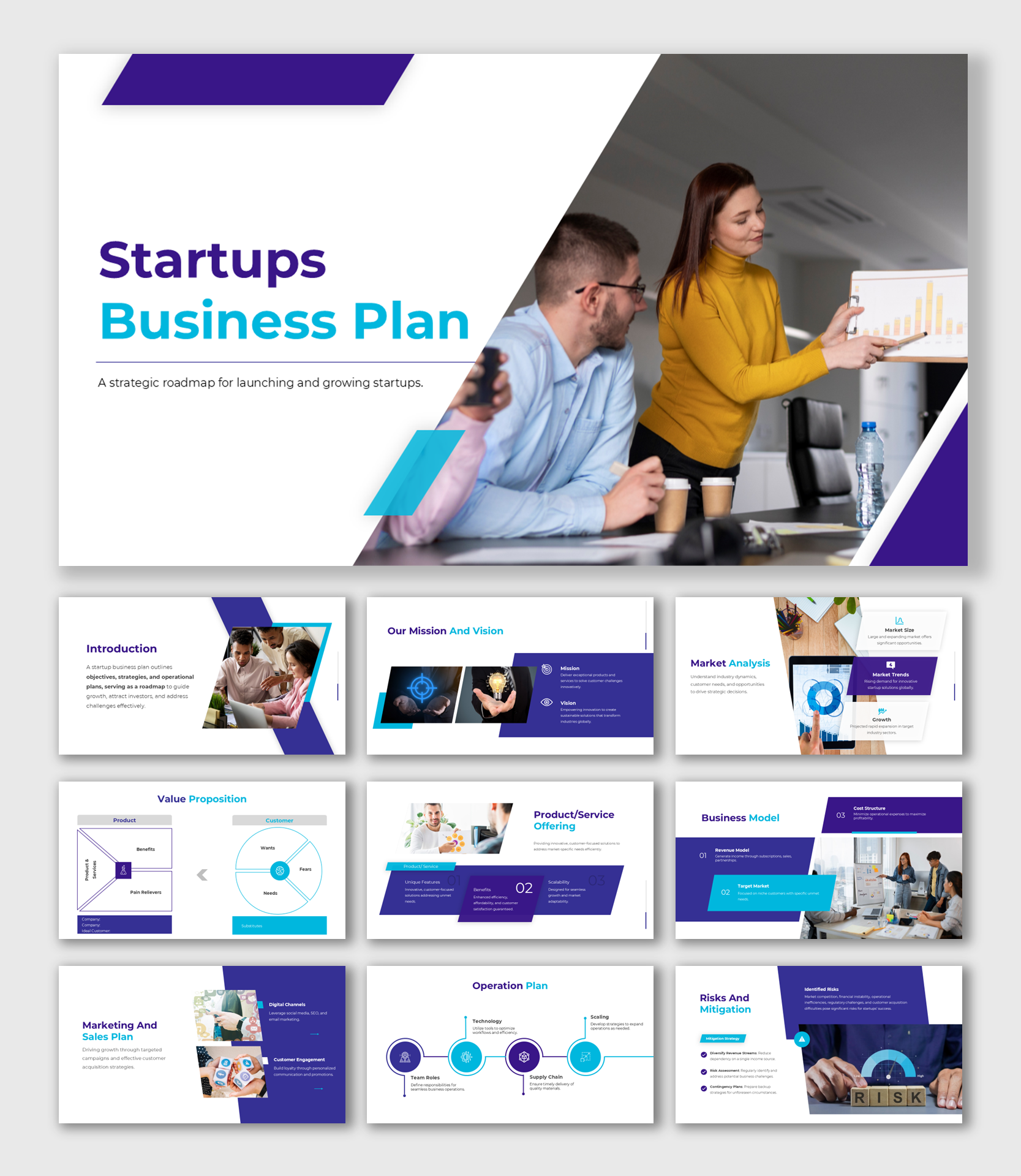
Once you know the order, starting from a business plan presentation template that already matches it is faster than building each slide from scratch. SlideEgg’s Business Plan & Strategy template collection has layouts built around this exact sequence, executive summary through the ask, as a PowerPoint deck or a Google Slides business plan template, so you’re filling in your numbers rather than designing slide layouts from zero.
If you’ve already got the content written somewhere else, notes, a doc, a rough outline, and would rather turn that into a first-pass deck than start from a template, SlideEgg’s AI Presentation Maker can generate a starting version from what you paste in, which you then edit into the slide order above.
Common Questions
FAQ
How many slides should a business plan presentation actually have?
Most funding-stage decks run 10 to 12 slides. A live investor pitch often compresses to fewer, since you’ll narrate detail out loud; an internal approval deck can run longer if the extra material lives in an appendix rather than the core narrative. The slide list in this article is the right starting count for a first draft, trim from there once you know your actual meeting length.
Do I need a table of contents slide?
Not for a typical 10 to 12 slide deck, it adds a slide without adding information the audience needs, since they can see the whole arc in one sitting. It earns its place past roughly 15 slides, or when the deck covers several distinct sections a reader might want to jump between.
What’s the difference between the executive summary slide and the rest of the deck?
The executive summary is a one-slide preview of the entire argument, what you do, the problem, the market, and the ask, compressed into a few lines each. Every slide after it makes one part of that summary in full. If someone only sees slide two, they should already know what you’re asking for.
Which slide should come right after the title slide?
The problem, not company background or history. Opening with founding-story slides delays the one thing the audience is actually there to evaluate: whether the problem is real and worth solving. Save the origin story, if it’s relevant at all, for a single line on the team slide.
Should financial projections come before or after the ask?
Before. The ask should feel like a natural next step once the audience has seen the market size, the business model, and the projections, not a number that appears out of nowhere. Putting the ask right after financials is also why it tends to land better than burying it at the very end.
Get the Order Right Before You Get the Design Right
Slide order isn’t a formatting detail, it’s the argument itself, laid out in the sequence a room actually needs to follow it. A well-designed deck with the wrong order still confuses people; a plain deck with the right order still gets the point across.
Start from the ten business plan slides above, cut what doesn’t apply to your specific business, and you’ll have a business plan slide deck that answers questions before they’re asked instead of scrambling to catch up when they are. Each slide should do one job: move the room from what you do to why they should say yes.
Ready to build it?
Browse Business Plan & Strategy Templates →