
Good business plan presentation examples don’t all look alike, because they’re not written for the same reader. The facts in the plan stay identical across versions — what changes is which facts lead, how much explanation the reader needs, and how much sits in the appendix.
Quick Answer
- Investors want market size, traction, and exit potential up front, with financial detail in the appendix.
- Lenders want cash flow stability, collateral, and conservative, repayment-focused projections.
- Internal leaders and boards want accountability: who owns what, by when, and against which KPI.
- Students need every core component explained clearly, since the presentation is usually graded against a rubric.
What moves is which facts lead, how much explanation each reader needs, and how much detail sits in the core deck versus the appendix.
Why the same plan needs different examples
A business plan presentation is an argument, not a document dump, and different readers need to be convinced of different things. An investor is deciding whether to bet on growth. A lender is deciding whether they’ll get repaid. A leadership team is deciding how to hold the business accountable to what it just committed to. A student is being evaluated on whether they understood how a business plan actually works.
Worth confirming first: this guide assumes you’re already building a business plan presentation. If you’re not sure you need one at all, as opposed to a business strategy presentation, the difference between the two is worth sorting out first.
For a broader set of example decks across industries and stages, SlideEgg’s roundup of business plan PowerPoint examples is a good next stop. This guide takes a narrower approach: one plan, shown four different ways.
Investor example: what investors need to see
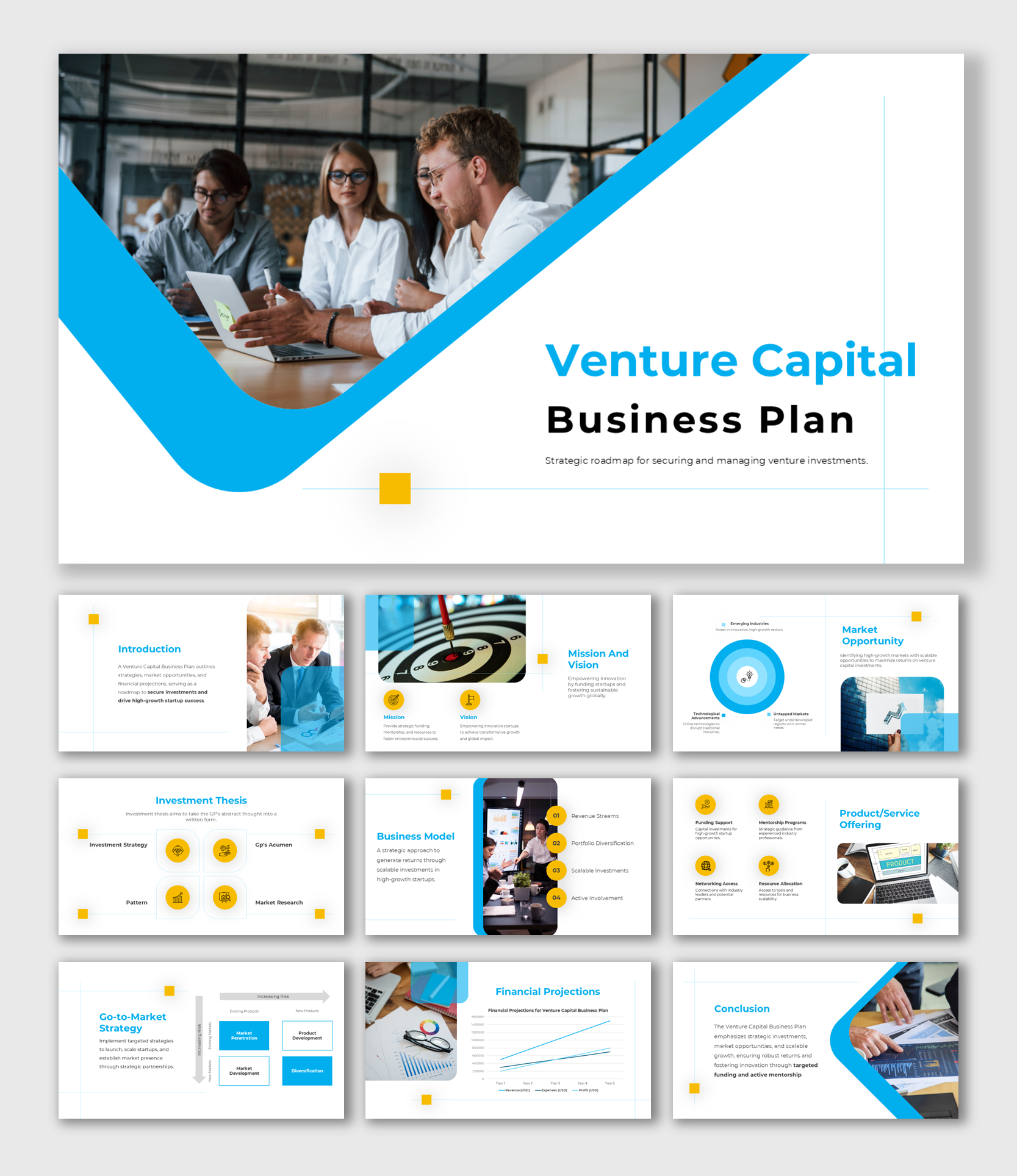
An investor example opens with the opportunity, not the company history — market size, growth rate, and why now, before the reader sees a product screenshot. Traction comes next: revenue, users, or pilot results that prove the model works at small scale. The financial model shows a path to a large outcome, and the ask is specific: how much, at what terms, and what it funds. Detailed financials and full competitor teardown belong in the appendix, available if asked.
Lender example: what banks and lenders need to see
A lender example leads with a different question: not “how big could this get,” but “how reliably does this generate the cash to repay what it’s borrowing.” That means cash flow projections up front, conservative rather than best-case, alongside collateral, existing debt obligations, and a clear statement of what the loan is for. A lender reading an investor-style deck often reads it as overconfident; the fix isn’t different numbers, it’s a different opening argument built from the same numbers.
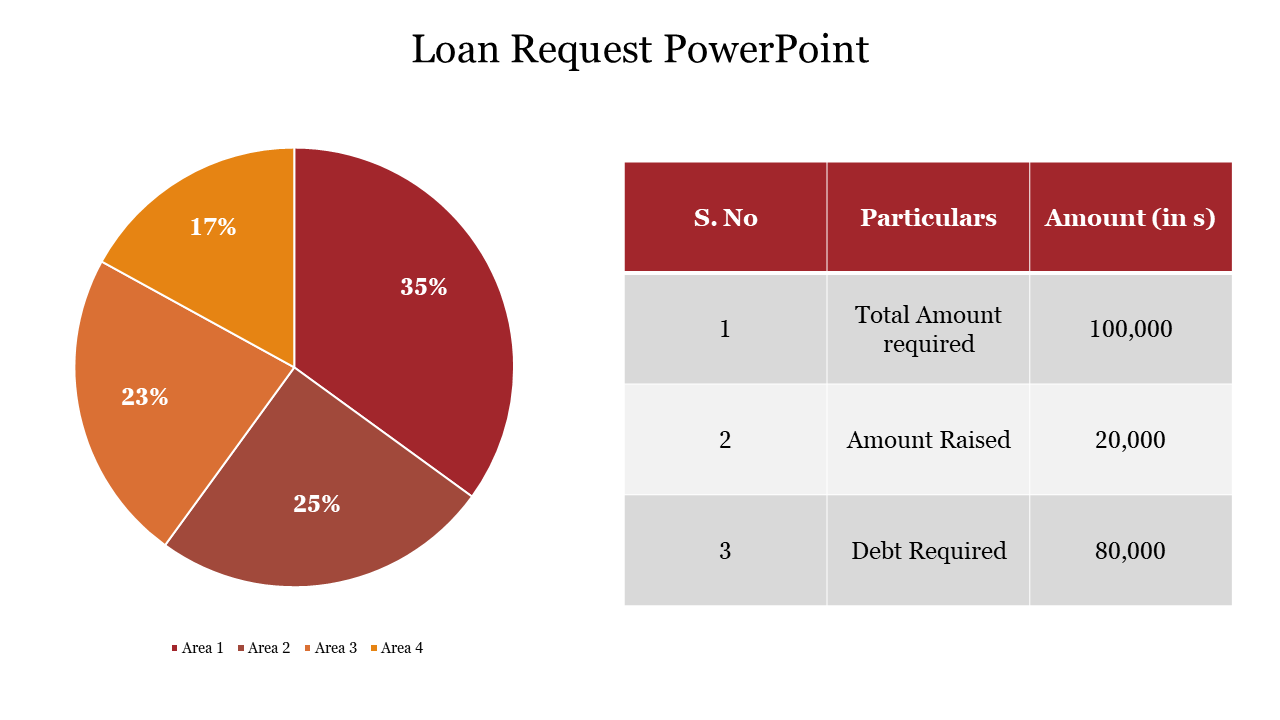
SlideEgg’s loan request template is built specifically to present a borrower’s financial situation and repayment capacity to a lender.
Leadership example: what internal leaders and boards need to see
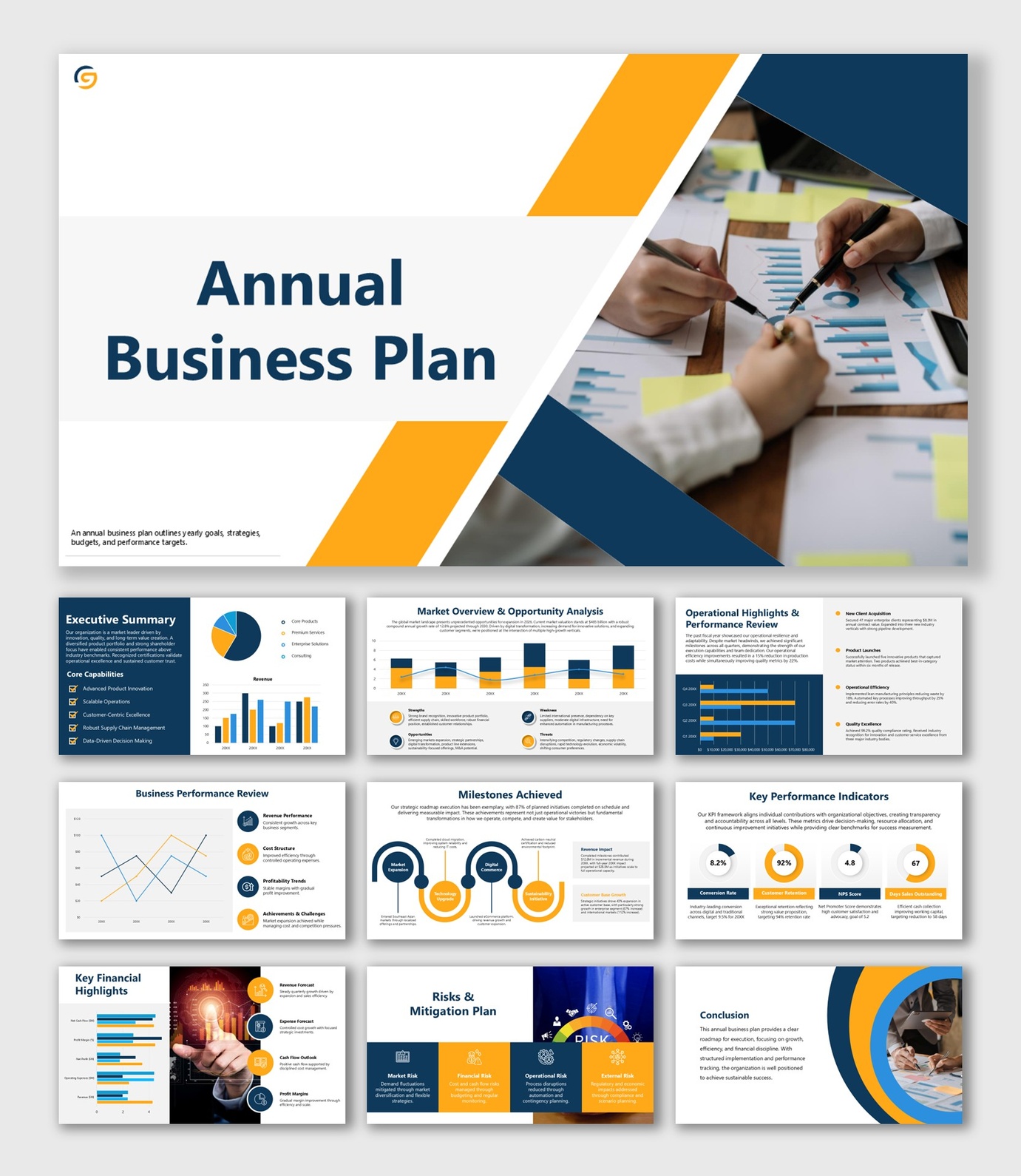
Internal leadership and board audiences are approving something formally, so structure matters more here. They expect a clear current-state section, the plan itself, the numbers behind it, and an explicit ask — usually a budget, a hire, or a go-ahead decision. Ownership and timeline get more airtime than in an investor deck, since the room will hold specific people accountable to specific dates afterward.
Student example: what academic reviewers need to see
A student example is built to demonstrate understanding, not to win a decision. Instead of assuming the reader already knows what a SWOT analysis or a break-even point is, a strong student presentation shows the work and briefly explains the framework before applying it. Every core component needs to be present and clearly labeled — executive summary, market analysis, competitive positioning, marketing and operations plan, and financial statements — since it’s typically scored against a rubric.
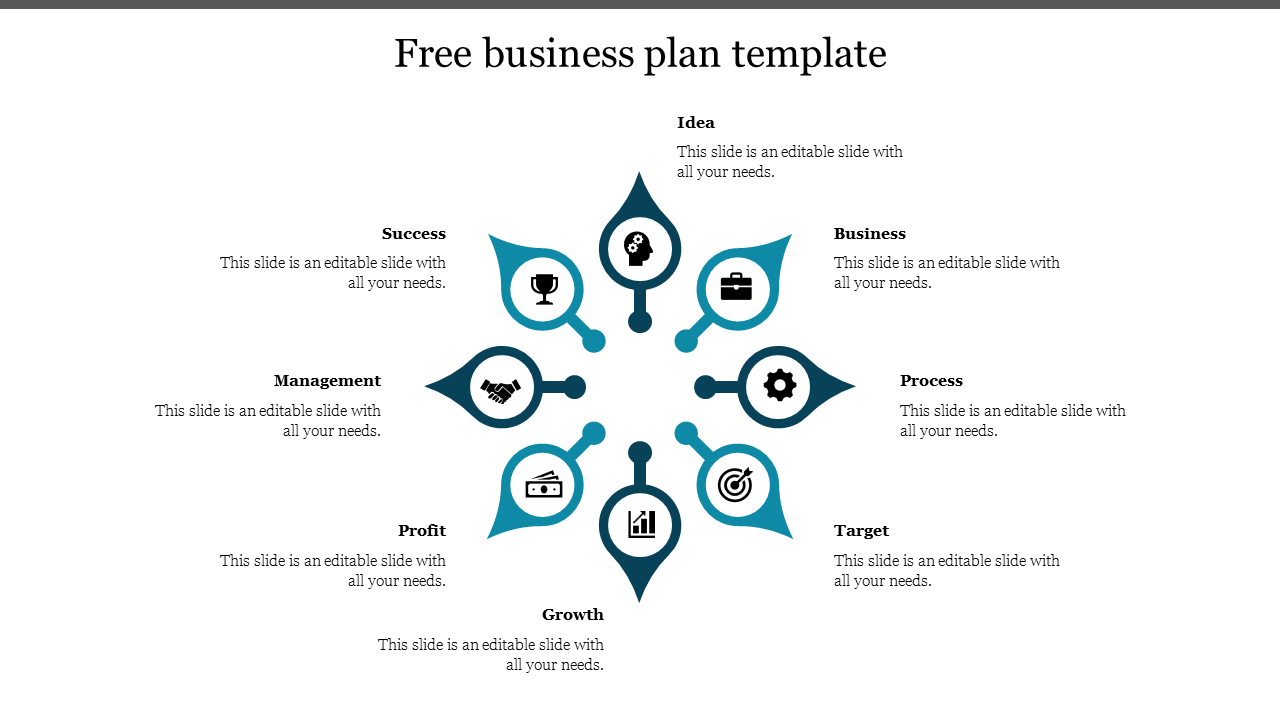
SlideEgg’s free business plan template is built and marketed for student use alongside startups and small businesses — treat it as a clean, beginner-friendly starting structure, then add whatever your rubric requires that it doesn’t already cover.
Side-by-side: how the four examples differ
| Audience | Leads With | Core Slides | Moves to Appendix |
|---|---|---|---|
| Investors | Market size, traction, exit potential | 10–12 | Full financial model, cap table, extended competitor detail |
| Lenders | Cash flow stability, collateral, repayment | 10–12 | Growth narrative, long-term market projections |
| Leadership/Board | Current state, plan, ownership, ask | 12–15 | Department-level detail, historical performance |
| Students | Full framework coverage, clear explanation | ~15 | Rarely; completeness is usually the point |
These ranges are starting points, not rules. For the full breakdown by audience, meeting length, and delivery method, see how many slides a business plan presentation should have.
How to adapt one plan for multiple audiences
Rather than building four separate decks from scratch, start with a single core deck built around the slides a business plan presentation should include, then adapt it per audience. If you’re working from a written plan rather than an existing deck, converting a written business plan into a presentation is the step that comes first.
From that core deck, build each audience version by reordering what leads, moving detail into or out of the appendix, and adjusting how much you explain versus assume. The underlying numbers should never change between versions; only the argument built around them does.
The software you build all four in matters too. If you’re weighing PowerPoint, Google Slides, and Canva for a business plan presentation, a shared core deck is easiest to maintain wherever duplicating and lightly editing a deck is least friction.
Common Questions
FAQ
Do investors and lenders really look at the same business plan presentation differently?
Yes. An investor is underwriting growth and upside, so they weigh market size, traction, and exit potential heavily. A lender is underwriting repayment, so they weigh cash flow stability, collateral, and conservative projections instead. The underlying business can be identical; what each reader needs to see first is not.
What makes a business plan presentation example good for students specifically?
A student example needs to demonstrate every core component of a business plan clearly, market analysis, competitive positioning, financial statements, go-to-market, because it’s usually being graded against a rubric. Real investor or lender decks skip explaining what a term means; a strong student example doesn’t assume that background.
Should I build one master deck or four separate decks for different audiences?
Build one master deck with every slide you might need, then assemble each audience version from it rather than rewriting from scratch. Keep a shared core, the problem, the model, the numbers, and swap the emphasis, appendix depth, and framing per audience. That’s faster than maintaining four unrelated presentations and keeps the underlying facts consistent.
What’s the single biggest difference between an investor deck and a lender deck?
Investor decks lead with upside: market size, growth rate, and what a successful outcome looks like. Lender decks lead with downside protection: how the loan gets repaid even if growth is slower than planned. The same financial model can support both, but the opening slides need to argue for different things.
How many slides should each audience-specific version have?
As a starting point, investor and lender decks typically run 10 to 12 core slides plus an appendix, internal leadership decks run 12 to 15, and a student presentation built to cover every component thoroughly can run closer to 15. Exact counts depend on your meeting length and delivery format.
One plan, built for whoever’s reading it
An investor wants to know if this could get big. A lender wants to know if they’ll get paid back. A leader wants to know who’s accountable. A student needs to show they understood the whole picture. Same plan, same numbers, four different opening arguments.