Not every dispute needs a courtroom. Many are settled privately, with a neutral decision-maker, and a result both sides must follow. That’s arbitration, and this template is built to explain it in plain language, whether your audience is a law class, a business team, or clients who’ve never heard the term before. Browse more law PowerPoint templates if you need other legal topics for your deck.
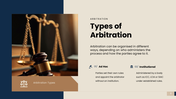
The deck starts with a simple introduction: parties hand their disagreement to a neutral arbitrator, who reviews the evidence and issues a binding award. From there, it explains the two main types of arbitration, ad hoc and institutional, and walks through the three-step process of filing, hearing, and award. A dedicated slide covers the role of arbitrators, including why independence and fairness matter so much.
To show why people choose it, there’s a clear comparison of the advantages over litigation: speed, cost savings, confidentiality, flexibility, expertise, and finality. The template also covers international commercial arbitration, including neutral forums and how the New York Convention helps awards get enforced across borders, and a slide on business disputes such as contract, supply chain, joint venture, and shareholder cases.
It stays honest, too. A challenges and limitations slide covers limited appeal, rising costs, and enforcement issues, so your audience can weigh both sides. A laws and legal framework slide lists key rules like the UNCITRAL Model Law, India’s Arbitration and Conciliation Act, and the US Federal Arbitration Act, and a final slide looks at future trends, from online hearings and AI tools to transparency and ESG disputes.
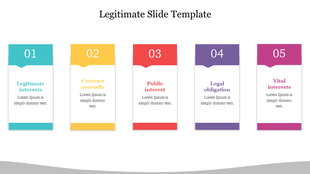
The layouts are clean and easy to follow, with icons, numbered points, and short text blocks. Every element is fully editable in PowerPoint and Google Slides, so you can add your own cases, adjust the wording for your region, and match the colors to your firm or school.