Neuroplasticity PowerPoint Presentation And Google Slides

 Canva
Canva
Neuroplasticity PowerPoint, Google Slides, and Canva Template
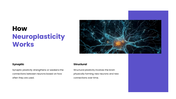
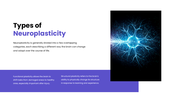
Two very different mechanisms are doing the same underlying job — one strengthens connections that already exist, the other builds entirely new ones. This template opens with that distinction: synaptic plasticity, which adjusts connection strength based on how often neurons fire together, and structural plasticity, the brain physically growing new neurons and new connections over time. A types slide adds a third piece to the picture, functional plasticity, the process that lets healthy brain regions take over tasks from damaged ones after injury.
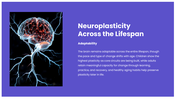
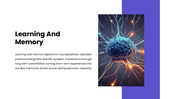
A lifespan slide is honest about how plasticity actually changes with age rather than treating it as constant — children show the highest capacity as core circuits are still being built, adults retain real capacity through learning and practice, and specific habits help preserve that capacity later in life. A learning-and-memory slide ties the mechanism directly to a familiar experience: repeated practice strengthens synaptic connections through long-term potentiation, the actual process that turns a short-term experience into a stored, durable memory.
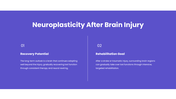
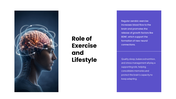
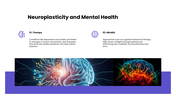
The injury-recovery slide covers what happens after a stroke or traumatic injury — surrounding brain regions gradually taking over lost function through intensive, targeted rehabilitation, with recovery framed as a continuing process rather than a fixed ceiling. A lifestyle slide gets specific about what actually supports this process: regular aerobic exercise increasing blood flow and triggering BDNF release, alongside sleep, nutrition, and stress management as supporting factors for memory consolidation. A mental-health slide covers the connection between neural connectivity and conditions like depression and anxiety, and how therapies such as cognitive behavioral therapy work by reinforcing new, healthier neural pathways over time.
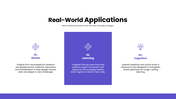
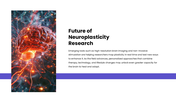
An applications slide connects the science to real practice across rehabilitation, spaced-repetition learning techniques, and skill recovery, while a closing research slide covers where the field is heading — high-resolution brain imaging, non-invasive stimulation, and personalized approaches combining therapy, technology, and lifestyle change.
Built for neuroscience educators, psychology and rehabilitation programmes, occupational and physical therapy training, and mental health professionals who need this explained with real mechanistic accuracy. Every mechanism, stage, and factor is yours to edit.
Features of this template
- 100% customisable slides and easy to download.
- The slides contain 16:9 and 4:3 formats.
- Easy to change the colours quickly.
- Highly compatible with PowerPoint, Google Slides, and Canva templates.
You May Also Like These PowerPoint Templates


Showing20 of69,218 templates