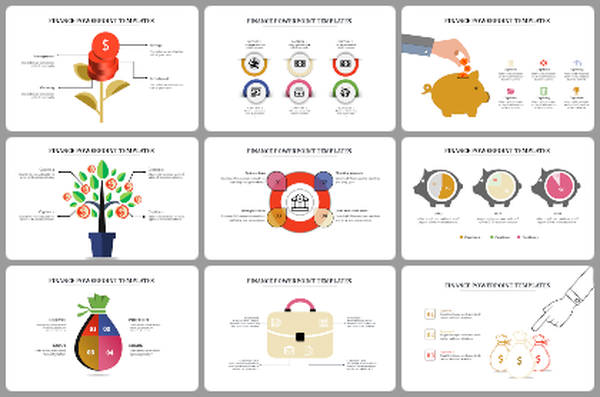
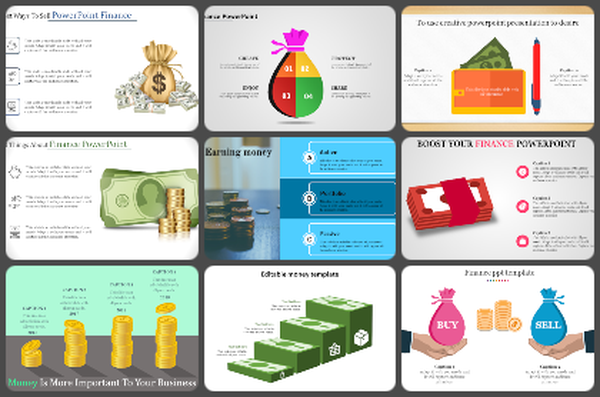
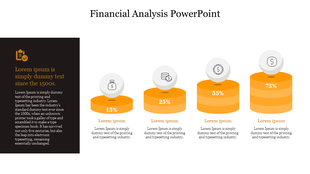
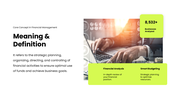
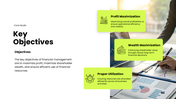
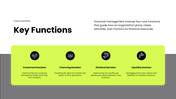
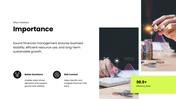
Financial management sounds like one job, but it's really four running at once: figuring out where to invest, how to fund it, what to do with the profit, and how much cash to keep on hand for the unexpected. This template walks through all four without skipping the connective tissue between them — starting with a plain-language definition, then the core objectives most finance teams are actually chasing: profit, shareholder value, and resources that don't sit idle. Browse more financials powerpoint templates to round out your finance or corporate strategy presentation.
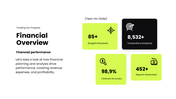
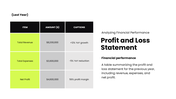
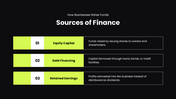
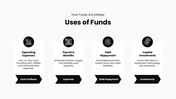
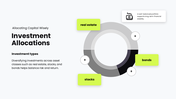
The middle stretch is where the deck earns its keep. A financial overview slide moves into real reporting territory — revenue, expenses, forecast accuracy — before a full profit-and-loss breakdown lays out the numbers a board actually wants to see. Two slides split the funding question cleanly in half: where the money comes from (equity, debt, retained earnings) and where it goes (payroll, operating costs, debt repayment, growth investment). An investment-allocation slide and a portfolio-performance comparison across stocks, bonds, and real estate round out the capital-allocation side of the story.
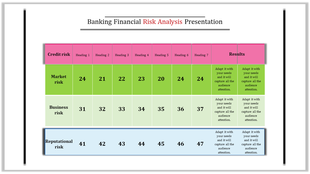
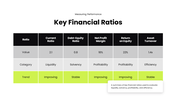
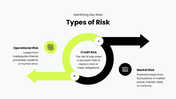
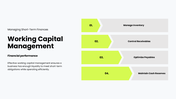
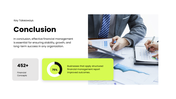
The back half turns toward what can go wrong and how to measure it. A key-ratios slide sets up liquidity, solvency, profitability, and efficiency as the four lenses every finance review should run through, a risk-types slide breaks down credit, market, and operational risk in plain terms, and a working-capital slide ties it all back to something practical: staying liquid enough to meet short-term obligations without stalling day-to-day operations. A closing conclusion reinforces the throughline — structured financial management is what turns good intentions into stable, sustainable growth.
Built for CFOs, finance managers, MBA finance courses, and financial consultants who need one deck that covers the discipline end to end rather than just the highlight reel. Every number, ratio, and category is yours to edit.


 Canva
Canva