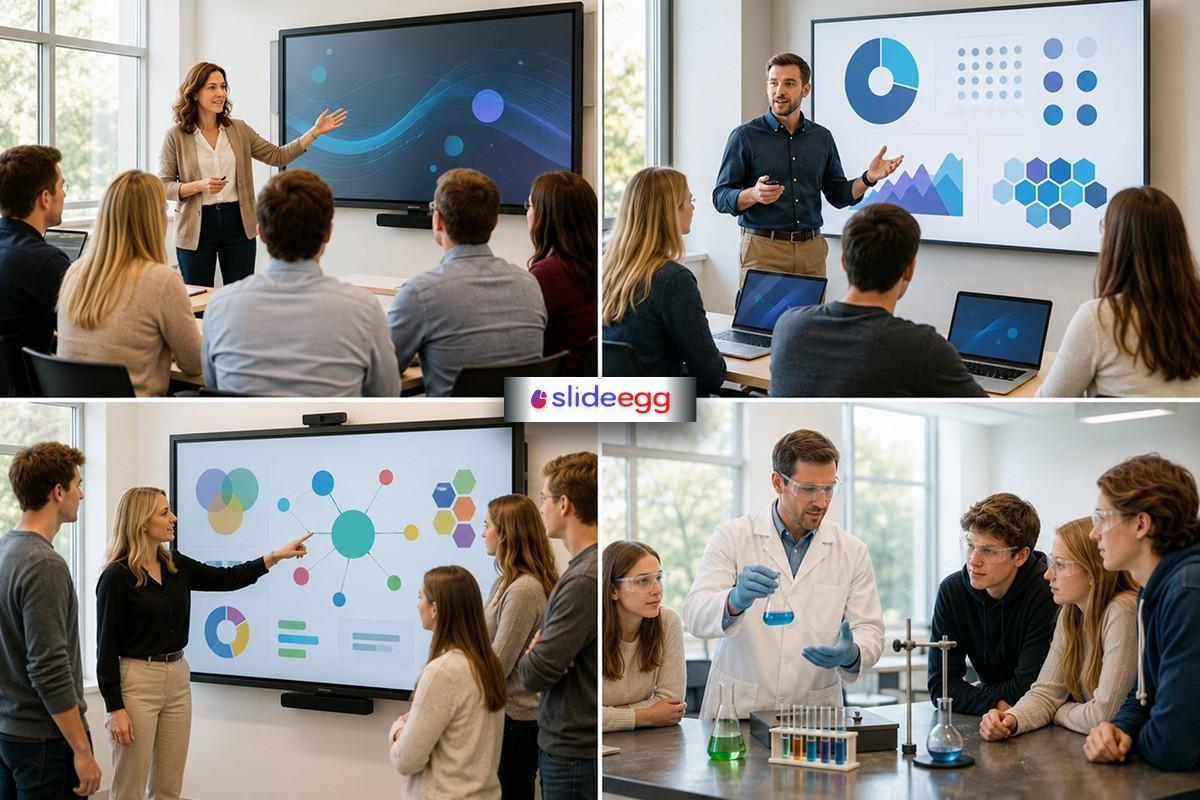
Education in 2026 is no longer limited to traditional lecture-style teaching. Classrooms today are more dynamic, and learners expect variety in how information is delivered. A single teaching style cannot fit every subject, every student, or every situation.
That is why understanding different types of education presentations is so important. When teachers choose the right presentation style, lessons become clearer, students stay more engaged, and learning feels more natural.
Let’s explore the most useful types of education presentations every teacher should know—and how each one can improve the learning experience.
1. Lecture-Based Presentations
This is the most traditional and widely used method. In this type, the teacher explains the topic step by step while students listen and take notes.
Even though it is old, it is still useful—especially for introducing new or complex topics.
For example, a college lecturer explaining “economic theories” may use a structured lecture presentation to break down concepts clearly.
However, the key is balance. A lecture should not become one-way communication. Adding small pauses, questions, or examples makes it more effective.
Think of it like pouring water into cups—you need to pause to make sure each cup is filled properly.
2. Interactive Presentations
Interactive presentations focus on participation instead of passive listening. Here, students are involved throughout the session.
Teachers may ask questions, conduct mini discussions, or use quick activities during the presentation.
For example:
- Asking students to solve a problem on the spot
- Encouraging group answers
- Using “think and respond” moments
This type works especially well in school classrooms where attention spans are shorter.
Interaction turns learning into a two-way conversation instead of a silent lecture.
3. Visual-Based Presentations
In this format, visuals carry most of the learning load. Instead of long explanations, ideas are shown through images, diagrams, charts, and symbols.
For example:
- Science topics explained using diagrams
- Geography is taught using maps
- Math concepts shown using step visuals
A visual presentation is like a picture book—it explains ideas quickly without too many words.
This method is especially helpful for younger students and visual learners who understand better through images than text.
4. Storytelling Presentations
Story-based teaching is one of the most powerful methods because humans naturally connect with stories.
In this type, lessons are explained through real-life situations, narratives, or examples.
For example:
Instead of directly explaining “climate change,” a teacher might tell a story about a farmer struggling with unpredictable weather.
Stories help students feel the concept, not just understand it. They create an emotional connection, which improves memory.
Think of storytelling as a bridge—it connects knowledge with emotion.
5. Group Presentation-Based Learning
This method shifts focus from teacher-led learning to student-led learning.
Students are divided into groups and asked to:
- Research a topic
- Prepare slides or notes
- Present their findings
For example, in a history lesson, each group can represent a different historical event and explain it to the class.
This approach builds teamwork, communication skills, and confidence.
It also helps students learn from each other, not just from the teacher.
6. Demonstration Presentations
Demonstration-based presentations are very practical. Instead of just explaining, the teacher shows how something works.
For example:
- A science experiment performed in front of students
- A math problem solved step-by-step on the board
- A coding concept demonstrated live
This method is powerful because students see the process in action.
It’s like learning to cook by watching someone cook—not just reading a recipe.
7. Digital or Hybrid Presentations
In 2026, digital learning will become a normal part of education. Hybrid presentations combine classroom teaching with digital tools.
This may include:
- Slides with multimedia elements
- Videos embedded in lessons
- Online quizzes during class
- Virtual collaboration tools
For example, a teacher might explain a topic in class and then show a short video to reinforce the concept.
This method blends traditional teaching with modern technology, making learning more flexible and engaging.
8. Inquiry-Based Presentations
In this type, the teacher does not start with answers. Instead, they begin with questions and let students explore.
For example:
Instead of explaining “why the sky is blue,” the teacher might ask:
“What do you think makes the sky appear blue?”
Students think, discuss, and discover answers step by step.
This method builds curiosity and critical thinking. It feels like solving a puzzle instead of memorizing facts.
Final Thoughts
Every classroom is different, and every topic needs a different approach. That is why knowing various types of education presentations is so important for teachers and educators.
A strong presentation is not about using one method—it is about choosing the right method at the right time.
When teachers combine lecture, visuals, storytelling, interaction, and demonstrations, learning becomes more meaningful and easier to understand.
In the end, the goal is simple: not just to teach information, but to make learning feel natural, engaging, and lasting.
FAQs
1. Why should teachers use different presentation types?
Because every student learns differently, using multiple methods helps reach more learners effectively.
2. Which presentation type is best for beginners?
Visual-based and storytelling presentations work best because they are simple and easy to understand.
3. Are interactive presentations suitable for large classrooms?
Yes, even small activities or questions can make large classrooms more engaging.
4. Do digital presentations replace traditional teaching?
No, they support traditional teaching by making lessons more flexible and engaging.
5. What is the main goal of using different presentation styles?
The main goal is to improve understanding, engagement, and memory for all types of learners.