If you have stood in front of a classroom full of students with different learning needs and felt your presentation fall flat, you are not alone. A slide filled with small text and no visuals does not work for most learners. For students with learning disabilities, autism spectrum disorder, ADHD, or sensory processing challenges, it can actually make things harder.
The good news is that a great presentation does not require design experience. It requires the right approach, the right tools, and a clear understanding of what your students actually need. This guide walks you through exactly that.
Why Most Presentations Fail in Special Education Classrooms
- Most presentations fail in special education classrooms because they are designed for speed, dense reading, and standard processing.
- Students in these classrooms need clarity, structure, visual support, and more time to engage with the content.
- When slides are simple and predictable, students can focus on understanding instead of struggling to keep up.
Tip: Use one idea per slide. If you are tempted to add a second point, make it a new slide instead.
What Makes a Presentation Work for Every Learner
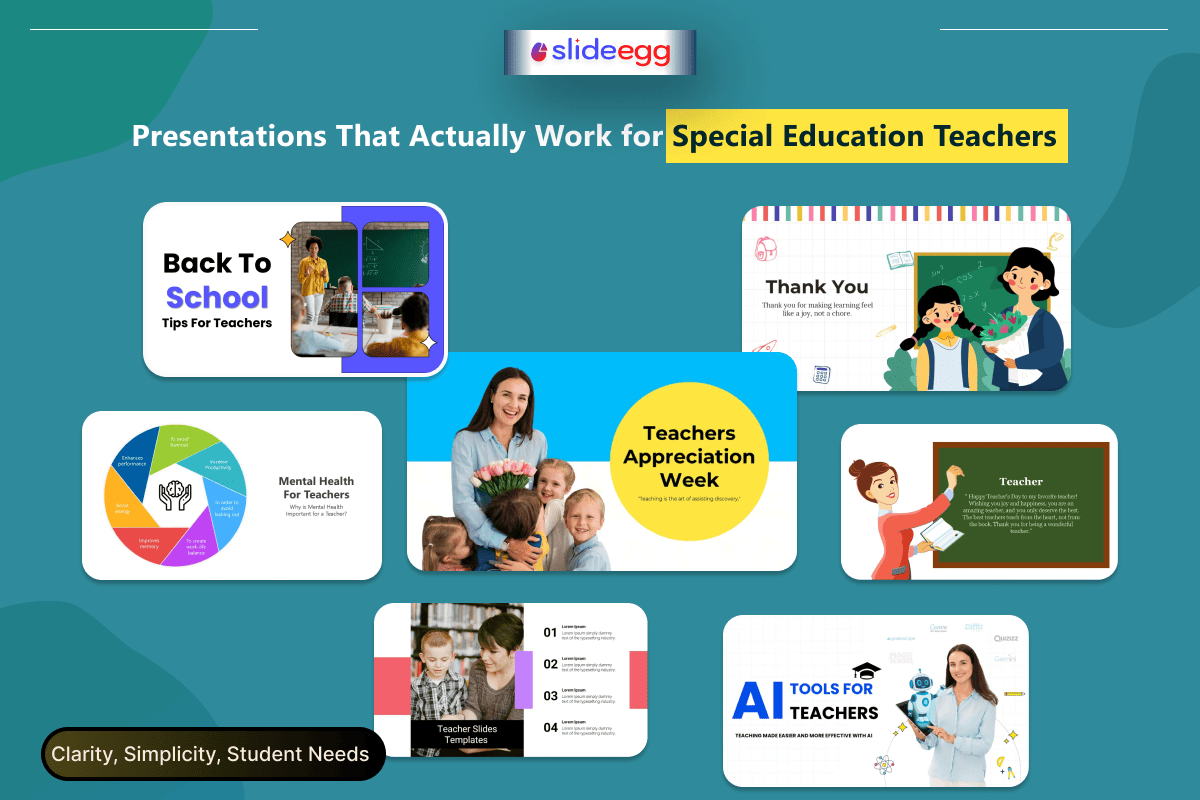
The best education PowerPoint template for a special classroom does three things well: it keeps things simple, it uses visuals to convey meaning, and it follows a consistent structure that students can predict and rely on.
Keep It Visual
• Visuals make understanding faster and clearer, especially for students who struggle with reading or verbal communication.
Use Readable Fonts and Strong Contrast
• Simple fonts, strong contrast, and accessibility reduce strain and help students read and follow content easily.
Follow a Predictable Format
• A consistent layout gives structure, making it easier for students to focus without confusion.
Built-in Processing Time
• Slowing down and adding pauses helps students absorb information at their own pace.
How to Structure a Lesson Presentation
Whether you are using a free PowerPoint template or building from scratch, learning how to structure a lesson presentation is key. This framework works well for most special education settings:
- Start with a visual agenda.
- Review what students already know
- Introduce one concept at a time
- Use a worked example
- Check for understanding
- Summarise the lesson
Tip: Save your presentations as templates so you can reuse the same structure across different lessons. Your students will recognise the format and settle into learning faster.
Choosing the Right Tool
There are many tools available for building classroom presentations. The right one depends on how you teach and what your students need.
| Tool | Best for | Key strength |
| PowerPoint | Offline classrooms, detailed lesson builds | Familiar, works without internet, wide template library |
| Google Slides | Collaborative planning, shared access | Easy to share and edit with co-teachers or coordinators |
| Canva | Visual-first designs, quick creation | Drag and drop, lots of free education templates |
| Slidea (by SlideEgg) | Interactive classroom sessions, live engagement | Audience participation, live quiz, real-time feedback |
Slidea is worth a closer look if you teach in a setting where student engagement is a challenge. It turns a regular presentation into a two-way experience. Students can respond to questions, participate in live quizzes, and give real-time feedback, all from their own devices. For students who struggle to raise their hand or speak in class, this kind of quiet participation can make a real difference. You can explore more AI tools for interactive sessions to see how they fit your classroom.
Notes for Different Roles
- For New and Student Teachers
Start with simple must-have education templates so you can spend more time teaching and less time designing slides. - For Co-Teachers in Inclusive Classrooms
Planning presentations together helps create a clear and consistent learning experience for every student. - For Special Education Coordinators and Department Heads
A shared template across the team saves time and helps maintain accessibility in every classroom. - For School Administrators and Principals
Choose presentation tools that support accessibility, meet different student needs, and make teaching easier.
Final Thought
- The best presentation for your students is one that helps them focus on learning instead of struggling to keep up with the slide.
- That does not come from complicated design, but from clear structure, simple visuals, and thoughtful support in every lesson.
- When you build presentations around what your students truly need, you create a classroom experience that feels clearer, calmer, and more effective.
Frequently Asked Questions
How many slides should a special education lesson have?
A shorter deck usually works best, because fewer slides make it easier for students to stay focused without feeling overwhelmed.
Can I use animations in special education presentations?
Yes, but only simple animations, because gentle movement can support attention while too much motion can become distracting.
What font size works best for students with visual processing challenges?
Larger font sizes make reading easier, so clear text with enough space helps students follow the lesson more comfortably.
Are free PowerPoint templates good enough for special education?
Yes, a well-designed free template can work very well when it is clean, simple, and easy for students to read.
Do I need to redesign my presentations from scratch?
No, small changes like better fonts, clearer layouts, and simpler content usually make a stronger difference than starting over.