You have a powerful business idea. You have done the research, crunched the numbers, and you believe in your vision with everything you have. But the moment you walk into that boardroom or join that video call — and your presentation falls flat — none of that preparation matters. Investors move on in seconds.
In 2026, the bar for business presentations is higher than it has ever been. Investors are more data-savvy, attention spans are shorter, and the competition for funding is fierce. Yet most presentations still make the same fundamental mistakes: too many words, too little story, and no clear path to profit.
This guide gives you everything you need — from structuring your slides to delivering with confidence — so your business plan presentation wins the room and secures the outcome you deserve.
What Is a Business Plan Presentation (And How It Differs From a Written Plan)
Many entrepreneurs make the mistake of converting their written business plan directly into slides. The result is a presentation that reads like a report — dense, boring, and forgettable.
A business plan document is your full blueprint. It is detailed, comprehensive, and designed to be read carefully, usually running 20 to 50 pages. A business plan presentation, on the other hand, is a visual storytelling tool. It is designed to be experienced in real time, covering the same core topics in a focused, engaging format — typically 10 to 15 slides in 15 to 20 minutes.
Think of the written plan as the full script of a film and the presentation as the trailer. The trailer needs to capture attention, communicate the core story, and make the audience want more. It is not a summary — it is a performance.
Key Insight: Always prepare both a full written business plan and a separate slide presentation. Never hand investors a printed copy of your slides as a substitute for a proper document.
Why Your Business Plan Presentation Matters More Than Ever in 2026
The way investors evaluate businesses has fundamentally shifted. Several trends are reshaping what a winning presentation looks like this year.
The Rise of Digital Pitching
A significant portion of investment pitches now happens over video calls. This changes everything about design and delivery. Slides need to be readable on a 13-inch laptop screen, transitions must be smooth, and your eye contact with the camera matters as much as it ever did in person.
AI-Assisted Due Diligence
In 2026, many investment firms use AI tools to pre-screen decks before a human review. Your financial projections, market size claims, and competitive positioning are being cross-referenced automatically. Vague claims and unrealistic numbers get flagged immediately. Precision and credibility are non-negotiable.
Shorter Attention Windows
Research consistently finds that investors spend an average of under three minutes reviewing a pitch deck before deciding whether to move forward. Your opening slides carry enormous weight. If you have not communicated your core value proposition by slide three, you may have already lost the room.
Business Plan Presentation vs. Business Plan Document vs. Pitch Deck
Many founders use these three terms interchangeably, but they are different tools built for different purposes. Getting them confused leads to presentations that miss the mark entirely.
| Format | Length | Primary Audience | Primary Goal | When to Use |
| Business Plan Document | 30 to 50+ pages | Lenders, legal, internal team | Full operational roadmap | Bank loans, SBA applications, internal planning |
| Business Plan Presentation | 10 to 20 slides | Investors, partners, board | Communicate vision and strategy clearly | Investor meetings, board updates, partner pitches |
| Pitch Deck | 10 to 15 slides | Seed and VC investors | Generate interest and secure a follow-up | Early-stage fundraising, demo days, cold outreach |
| Executive Summary | 1 to 2 pages | Any senior stakeholder | Quick overview before a full meeting | Pre-meeting prep, email introductions |
| One-Page Business Plan | 1 page | Advisors, co-founders, early conversations | Snapshot of business logic | Early ideation, networking events |
A pitch deck is typically shorter and more emotionally driven. It exists to get you into a room for a deeper conversation. A business plan presentation goes deeper. It shows you have thought through the execution, the risks, and the financial model. Use both together when you are raising a significant round.
Why Your Business Plan Presentation Must Start with a Business Case
Before you open PowerPoint or Google Slides, you need to build your business case. A business case is the logical foundation that justifies why your business should exist, why now is the right time, and why your approach is the right one. Without it, your presentation is just slides.
What a Strong Business Case Includes
• The specific problem you are solving and the evidence that it is real
• The size of the market you are entering and the data behind that number
• Why existing solutions are not good enough
• How your solution addresses the gap better than alternatives
• The financial return potential for investors or stakeholders
• The risks involved and your plan to manage them
A business case forces you to think before you present. Most presentations that fail do so because the presenter never went through this process. They jumped straight to building slides and ended up with a collection of pretty graphics that do not add up to a convincing argument.
Once your business case is solid, building the presentation becomes much faster because you know what you need to say and why each piece matters.
The 20 Essential Slides Every Winning Business Plan Presentation Must Have
Every successful business presentation covers the same foundational topics. Here is the proven structure that works for investors, banks, and strategic partners alike.
Section 1: Title Slide
Your title slide is the first thing your audience sees. It should include your company name, tagline, presenter name, date, and contact information. Keep it clean. One compelling tagline that captures what you do in plain language goes a long way. Avoid jargon here.
Section 2: The Problem
State the problem you solve in simple, direct language. Use real data to show the problem is widespread, painful, and currently underserved. The best problem slides create a moment of recognition where your audience thinks, yes, I have seen or felt that problem myself. If you can achieve that, you have already created emotional investment before you have even mentioned your product.
Example: If you are building a tool for small business accounting, do not say you are addressing inefficiencies in financial management workflows. Say that over 40 percent of small business owners in the US still do their accounting by hand or with tools not built for their industry, costing them an average of 6 hours per week they cannot get back.
Section 3: Your Solution
Describe what you offer and how it solves the problem you just laid out. Be specific. Avoid vague terms like innovative platform or next-generation solution. Show your audience exactly what the product or service does and how it delivers value. A screenshot, a short demo clip, or a simple diagram works much better than words alone.
Section 4: Market Opportunity
Investors and stakeholders need to see that the market you are entering is large enough to support a significant business. Present your Total Addressable Market (TAM), Serviceable Addressable Market (SAM), and Serviceable Obtainable Market (SOM). These numbers should come from credible third-party sources such as industry research firms, government data, or published market studies.
| Market Level | What It Means | Example (B2B HR Software) |
| TAM (Total Addressable Market) | The total global or national demand for your category | $42 billion (global HR software market) |
| SAM (Serviceable Addressable Market) | The portion of TAM your business model can realistically serve | $8 billion (US mid-market companies with 50 to 500 employees) |
| SOM (Serviceable Obtainable Market) | The slice of SAM you can capture in the next 3 to 5 years | $400 million (companies in your target verticals and geographies) |
Section 5: Business Model
Explain exactly how you make money. Include your revenue streams, pricing structure, payment model (subscription, transaction, licensing, project-based), and your unit economics. Do not skip the unit economics. Investors want to know your Customer Acquisition Cost (CAC) and Lifetime Value (LTV). A business with an LTV to CAC ratio of at least 3:1 signals a healthy, scalable model.
Section 6: Product or Service Details
Go deeper into what you sell. If you have a physical product, explain the manufacturing process and supply chain. If you have a software product, show the key features and the user experience. If you offer a service, explain the delivery model, the team structure, and what makes your service different from what competitors offer.
Section 7: Traction and Milestones
Nothing convinces investors faster than proof that real customers are already paying for your product. Show your traction clearly: number of customers, monthly recurring revenue, growth rate, key contracts signed, partnerships announced, or media coverage received. If you are pre-revenue, show product development milestones, pilot results, or letters of intent.
A milestone timeline presented as a simple chart works well here. Show where you have been and where you are going with dates attached to each milestone.
Section 8: Competitive Landscape
Acknowledging your competition shows investors that you understand the market. Pretending you have no competitors is one of the fastest ways to lose credibility. Use a competitive matrix to compare yourself against direct and indirect competitors across the dimensions that matter most to your customers.
| Feature / Attribute | Your Company | Competitor A | Competitor B | Competitor C |
| Real-time data sync | Yes | No | Yes | No |
| Pricing (per user/month) | $29 | $49 | $39 | $19 |
| Mobile app | Yes | Yes | No | Yes |
| Custom integrations | Yes | Limited | Yes | No |
| Customer support (24/7) | Yes | No | No | No |
| Free trial available | Yes | Yes | No | Yes |
Section 9: Marketing and Customer Acquisition Strategy
Explain how you will reach your target customers and convert them into paying clients. Break this down into your top two or three acquisition channels and the expected cost and conversion rate for each. In 2026, the most effective channels vary significantly by industry, so be specific about what works for your market rather than listing every possible marketing tactic.
• Content marketing and SEO for inbound lead generation
• Paid search and social media for direct response campaigns
• Partnership and referral programs for lower-cost acquisition
• Sales development teams for outbound B2B prospecting
• Events, trade shows, and community building for relationship-driven industries
Section 10: Sales Strategy
Your sales strategy should explain the path from prospect to closed customer. Include your sales cycle length, deal size, who makes the purchase decision, and how your sales team is structured. For B2B companies, include whether you sell directly, through resellers, or through a combination of both. For B2C companies, focus on your conversion funnel and the key touchpoints along the customer journey.
Section 11: Operations Plan
Show investors and stakeholders that you can actually deliver what you are promising. The operations section covers your production or service delivery process, technology infrastructure, supply chain (if applicable), key vendor relationships, and quality control processes. A simple flow diagram works well here to show how your operation functions from input to output.
Section 12: Team
In early-stage companies, especially, investors bet on people as much as they bet on ideas. Your team slide should highlight the founders and key leaders, their relevant experience, and any notable past achievements. If a team member sold a company before, launched a product used by millions, or built a team that scaled from 10 to 200 people, say so explicitly.
Also include any advisors, board members, or investors who lend credibility. A well-known name in your industry on your advisory board can make a meaningful difference to how seriously investors take your pitch.
Section 13: Financial Projections
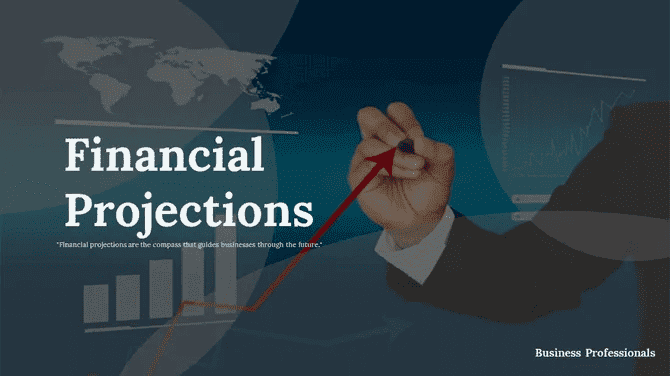
Financial projections are where many business plan presentations fall apart. Projections that look like a hockey stick with no explanation lose credibility immediately. Your projections should be built bottom-up, meaning you start with your assumptions about customer acquisition, pricing, and churn, and then calculate the revenue and cost outputs from those assumptions.
Present three to five years of projections. Include revenue, gross margin, operating expenses, EBITDA, and cash flow. Show a break-even analysis so investors know when you expect the business to become self-sustaining.
| Metric | Year 1 | Year 2 | Year 3 | Year 4 | Year 5 |
| Revenue | $480K | $1.4M | $3.8M | $8.2M | $16.5M |
| Gross Margin | 62% | 67% | 71% | 74% | 76% |
| Operating Expenses | $820K | $1.6M | $3.2M | $6.1M | $11.8M |
| EBITDA | ($340K) | ($200K) | $600K | $2.1M | $4.7M |
| Cash Flow | ($410K) | ($280K) | $380K | $1.8M | $4.2M |
| Headcount | 8 | 18 | 34 | 58 | 95 |
Section 14: Funding Requirements and Use of Funds
Be specific about how much money you are asking for and exactly how you plan to spend it. Break down the allocation by category (product development, sales and marketing, hiring, operations, working capital) and explain the logic behind each allocation. Investors do not want to see a general breakdown. They want to understand what each dollar buys and what milestone it helps you reach.
| Use of Funds | Allocation | Percentage | Expected Outcome |
| Product Development | $600,000 | 40% | Launch v2.0 with enterprise features by Q3 |
| Sales and Marketing | $450,000 | 30% | Reach 500 paying customers by the end of Year 2 |
| Team Hiring | $300,000 | 20% | Add 4 engineers and 2 account executives |
| Operations and Infrastructure | $150,000 | 10% | Scale cloud infrastructure for 10x user growth |
Section 15: Exit Strategy
Many founders skip this slide, but investors almost always want to see it. An exit strategy tells investors how they will eventually get a return on their investment. Common exit options include acquisition by a strategic buyer, merger with a competitor, IPO, or management buyout. You do not need to commit to a specific exit path, but you should show that you have thought about it and that there are realistic options given your industry and business model.
Section 16: Risk Analysis and Mitigation
A presentation that ignores risk does not build trust. One that identifies risks and explains how you plan to address them shows maturity and preparation. List the top four or five risks your business faces, whether they are regulatory, competitive, operational, or financial, and pair each one with a specific mitigation strategy.
| Risk | Likelihood | Impact | Mitigation Plan |
| Key customer concentration | Medium | High | Diversify customer base; no single customer to exceed 15% of revenue |
| Competitor price reduction | High | Medium | Focus on service quality and switching costs rather than price competition |
| Regulatory change in the core market | Low | High | Retain regulatory counsel; monitor policy changes quarterly |
| Key employee departure | Medium | High | Equity vesting schedules; succession planning for critical roles |
| Technology failure or data breach | Low | Very High | SOC2 certification, quarterly penetration testing; incident response plan |
Section 17: Social Proof and Testimonials
If you have customers who love your product, let them speak in your presentation. Customer testimonials, case studies, and usage statistics build credibility faster than anything you say about yourself. Even a single strong quote from a recognizable company in your target market can shift the tone of a room.
If you have press coverage from respected outlets, include logos on a media slide. If you have awards or industry recognition, mention them briefly. These signals tell your audience that credible third parties have already validated what you are claiming.
Section 18: Technology and Intellectual Property
If your business is built on proprietary technology, explain what makes it defensible. Do you have patents filed or granted? Do you have trade secrets embedded in your process? Is your technology protected by copyright or other IP mechanisms? For software companies, explain the core architecture and why it gives you a lasting advantage over competitors who might try to replicate what you do.
For non-technology businesses, this section can focus on proprietary processes, exclusive supplier relationships, long-term contracts, or other structural advantages that make your position difficult to replicate.
Section 19: Sustainability, ESG, and Corporate Responsibility
In 2026, institutional investors, large corporations, and even many individual investors pay close attention to how businesses approach environmental, social, and governance issues. This does not mean you need to have a full ESG program on day one, but you should be able to speak to how you think about your impact on employees, customers, communities, and the environment.
If sustainability is core to your business model, make it a feature rather than a footnote. Companies that genuinely build responsible practices into their operations often attract better talent, win more loyal customers, and access capital from ESG-focused funds.
Section 20: The Ask and Next Steps
End your presentation with a clear, specific call to action. What do you want your audience to do next? If you are raising money, state the amount, the valuation, and the terms you are proposing. If you are seeking a partnership, name the specific kind of partnership and what it would involve. If you are presenting to your board, be explicit about the decisions you need them to make.
Do not end with a generic thank-you slide that asks for questions. End with momentum. Restate your vision, remind the audience of the size of the opportunity, and give them a clear, low-friction next step such as scheduling a follow-up meeting, reviewing a term sheet, or signing an NDA to access more detailed financials.
How to Structure Your Story — The Narrative Arc Investors Remember
The most funded presentations are not the ones with the best numbers — they are the ones that tell the most compelling story. Human brains are wired for narrative, not data. Structuring your presentation around a story arc does not mean being less rigorous; it means packaging your rigorous work in a format the human brain actually retains.
The classic three-act structure applies perfectly to business pitches. Act One (Slides 1 to 3) sets the scene — who you are, what world your customer lives in, and what problem makes that world painful. Act Two (Slides 4 to 8) introduces the solution, shows the market opportunity, explains how it works, and proves you can win. Act Three (Slides 9 to 10) is the resolution — the team that will execute it and the financial future that awaits.
Begin your presentation with the most powerful version of the problem. Lead with a customer story, a surprising statistic, or a bold claim. Do not begin with a history of your company or a definition of the market — that is what kills momentum in the first 60 seconds.
Slide Design Principles That Make Investors Pay Attention
Design is not decoration — it is communication. Poor design forces investors to work harder to understand your message, and they will not bother. These are the non-negotiable design principles for 2026 presentations.
One Idea Per Slide
Each slide should have one clear point. If you need a title to explain what the slide is about, you may have too much on it. The slide itself should communicate the point visually, and you explain verbally. Test yourself: can a stranger understand what this slide is saying in five seconds? If not, simplify.
Typography Rules
Use a maximum of two fonts — one for headings and one for body text. Keep body text at 24pt or larger for in-person presentations and 20pt or larger for screen shares. Use bold sparingly to emphasize only truly critical information. Avoid all-caps text blocks — they are harder to read and feel aggressive.
Color Psychology
Use a maximum of three colors: a primary brand color, a secondary accent, and a neutral background. Dark navy and white convey authority and trust — common in finance and enterprise. Bright, energetic palettes work well for consumer brands. Whatever your palette, ensure sufficient contrast between text and background, especially for accessibility.
Data Visualization Best Practices
Use the simplest chart that tells the story. Bar charts for comparisons. Line charts for trends over time. Pie charts are only used when you have three or fewer segments. Never use 3D charts — they distort proportions and look dated. Label your data directly on charts rather than using a legend, which forces the reader’s eyes to travel back and forth. Highlight the key number or trend with a different color and let the rest recede.
Financial Projections That Are Believable, Not Just Impressive
There is a well-known joke in venture capital: every startup’s revenue hockey stick looks identical. The difference between presentations that work and those that do not is whether the underlying assumptions feel grounded in reality.
Build your projections from the bottom up. Start with your realistic customer acquisition numbers based on your current marketing capacity, conversion rates, and budget. Then layer on your revenue per customer. This bottom-up model is far more credible than taking the top-down approach of assuming you will capture a percentage of a massive market.
Include three scenarios in your financial model: a base case (most likely), a conservative case (assuming delays and lower conversion), and an optimistic case (if key partnerships or channels outperform). Showing this range proves you have stress-tested your numbers and understand the variables at play.
Be prepared to defend every assumption verbally. Investors will ask about your customer acquisition cost, your churn rate assumptions, your gross margin trajectory, and the timing of profitability. Practice these answers until they are second nature.
Key Financial Metrics to Include: Monthly Recurring Revenue (MRR) or Annual Recurring Revenue (ARR), Customer Acquisition Cost (CAC), Lifetime Value (LTV), Gross Margin %, Burn Rate and Runway, and Break-Even Timeline.
Common Business Plan Presentation Mistakes (And How to Avoid Them)
Even well-prepared founders fall into predictable traps. Here are the most common mistakes seen in business plan presentations — and exactly how to avoid each one.
1. Saying you have no competition. Every business has competition — direct competitors, indirect substitutes, or the ‘do nothing’ option. Acknowledge them and explain your differentiation clearly.
2. Overcrowding slides with text. If you are reading from your slides, you have too much text. Slides are visual aids, not teleprompters.
3. Hockey-stick projections without justification. Projecting explosive growth is fine if your assumptions support it. Without a clear explanation of what drives the inflection point, these numbers destroy credibility.
4. Ignoring the ask. Some founders are so uncomfortable asking for money that they rush through the funding slide or bury it at the end. Be direct, confident, and specific about what you need and why.
5. Weak team slides. A list of names and titles tells investors nothing. Explain why each person is uniquely qualified for their role in this specific business.
6. Not tailoring the presentation to the audience. A deck for an angel investor is different from one for a bank. A presentation for a strategic partner is different from one for a VC. One size does not fit all.
How to Tailor Your Presentation for Different Audiences
One of the most overlooked elements of business plan presentations is audience customization. The slides themselves may be similar, but what you emphasize, the language you use, and the questions you anticipate must shift based on who is in the room.
Angel Investors
Angels are often backing the founder as much as the business. Emphasize your personal story, your domain expertise, and your commitment. They want to believe in you. Keep financials accessible and avoid overly complex models. Focus on the near-term milestones that their money will unlock.
Venture Capital Firms
VCs are looking for outsized returns — typically 10x or more on their investment. Emphasize your total addressable market size, your scalability, and your defensible moat. Show a clear path to a large exit — either an IPO or acquisition. Have deep, detailed financial models ready as backup. VCs will probe your assumptions harder than any other audience.
Banks and Lending Institutions
Banks care primarily about your ability to repay. Emphasize cash flow stability, existing revenue, collateral, and your personal credit or business credit history. Your financial projections should be conservative and backed by historical data where possible. Risk mitigation strategies are especially important for this audience.
Strategic Partners
Strategic partners are evaluating fit and mutual benefit. Emphasize how the partnership creates value for both parties, what complementary capabilities you bring, and what joint opportunities become possible. Financial projections are less critical here — strategic alignment and execution credibility matter more.
Delivering Your Presentation — Confidence, Body Language, and Handling Tough Questions
A world-class deck delivered poorly is still a failed pitch. The way you present is as important as what you present.
Preparation and Practice
Practice your full presentation out loud at least seven times before the real thing. Record yourself once and watch it back — this is uncomfortable but invaluable. Time yourself. Know every slide cold so that you are looking at the audience, not the screen. Practice transitions between slides so the narrative flows naturally.
Body Language and Presence
Stand (or sit) straight and open. Plant your feet. Avoid pacing nervously. Make deliberate eye contact — in person, connect with different individuals around the room; on video, look directly into the camera lens rather than at the screen. Speak slightly slower than feels natural. Nervous speakers tend to rush. Pauses are powerful — let key points land before moving on.
Handling Tough Questions
Prepare a list of the 20 hardest questions you might be asked and rehearse clear, confident answers to each. Common tough questions include: ‘What if a bigger competitor copies you?’ ‘Why will customers choose you over the incumbent?’ ‘What are your unit economics at scale?’, and ‘What does this business look like in five years?’ If you do not know an answer, say so honestly and offer to follow up. Trying to bluff an experienced investor is far more damaging than admitting a knowledge gap.
The Golden Rule of Q&A: Listen to the full question before answering. Pause for one second. Then respond concisely. Rambling answers signal uncertainty. Short, direct answers signal mastery.
Best Tools to Build Your Business Plan Presentation in 2026
Choosing the right tool for your presentation is a practical decision that affects both your design quality and your workflow. Here is a clear breakdown of the most popular options.
- Slidea: An interactive presentation tool designed for audience engagement. It adds live polls, quizzes, Q&A, word clouds, and real-time analytics to your slides, making it ideal for educators, webinars, workshops, and hybrid events where interaction matters more than static design.
- Microsoft PowerPoint: Still the industry standard for corporate presentations. Maximum flexibility, widest compatibility, and the richest feature set. Steep learning curve for non-designers, but template libraries and AI design assistance (via Microsoft Copilot) have significantly improved output quality.
- Canva: Excellent for non-designers who need professional-looking results quickly. Massive template library and a very gentle learning curve. Slightly limited for complex data visualization. Free tier is generous.
- Beautiful.ai: Smart slide design that automatically adjusts layout as you add content. Great for maintaining visual consistency with minimal design effort. Particularly popular for investor decks.
- Pitch.com: Built specifically for business presentations and investor decks. Excellent collaboration features, real-time analytics on who viewed your deck and for how long, and a clean, modern aesthetic out of the box.
- Google Slides: Best for collaboration and accessibility. Works everywhere, no software to install, and easy to share with a link. Design capabilities are more limited than those of PowerPoint or Canva, but sufficient for straightforward decks.
Business Plan Presentation Checklist
Before you present to any investor or stakeholder, run through this checklist to ensure your presentation is truly ready.
• Every slide has a clear, single headline that states the key point
• No slide has more than 40 words of text
• All data sources are cited
• Financial projections include stated assumptions
• The funding ask is specific: amount, use of funds, valuation
• All charts are labeled and readable at screen size
• Competitor analysis is honest and up to date
• The team slide explains why this team, not just who
• The deck has been reviewed by at least one person outside your organization
• You have practiced the verbal delivery at least five times
• You have a detailed written business plan ready for investors who request it
Conclusion: Your Presentation Is Your First Product — Make It Count
Long before an investor buys into your business, they buy into your presentation. It is the first real product you ship to them — a demonstration of how you think, communicate, organize information, and persuade. Every choice you make in that deck, from the structure to the design to the data you choose to show, signals something about how you will run your company.
A winning business plan presentation in 2026 is not about following a template. It is about knowing your audience, telling a true story with clarity and conviction, backing every claim with credible data, and delivering it with the confidence that comes from genuine preparation.
The entrepreneurs who secure funding are not always the ones with the best businesses — they are the ones who best communicate the potential of their businesses. That communication starts here, with the quality of what you build and the conviction with which you present it.
Start building. Start practicing. The room is waiting for you.
Frequently Asked Questions
1) How long should a business plan presentation be?
For an investor pitch, aim for 10 to 15 slides and a verbal presentation of 15 to 20 minutes, leaving ample time for questions. For a bank presentation, 15 to 20 slides are appropriate. Always prepare more backup material than you intend to show — you will need it for detailed questions.
2) How many slides are ideal for investors?
The widely accepted benchmark for a VC or angel pitch deck is 10 to 12 slides. The famous Sequoia Capital pitch deck framework covers exactly 10 topics. More slides rarely improve your chances and often signal an inability to prioritize. Fewer slides, executed brilliantly, almost always outperform lengthy decks.
3) Should I send my deck before or after the meeting?
It depends. For warm introductions where the investor has agreed to meet, sending a teaser deck (5 to 7 slides) before the meeting can prime the conversation. However, sending your full deck cold, without a relationship, risks having it reviewed and dismissed in two minutes without a chance to present. When in doubt, get the meeting first, then send materials afterwards as a follow-up.
4) What is the difference between a pitch deck and a business plan presentation?
A pitch deck is typically a shorter, high-energy version of your business plan presentation, designed for initial investor meetings to generate interest and secure a follow-up. A business plan presentation is more comprehensive, covering all aspects of your business in detail, and is often used for bank loan applications, partnership discussions, or later-stage investor due diligence.
5) How do I present financial projections without being dismissed?
Lead with your key assumptions before presenting the numbers. Show that your projections are driven by specific, defensible inputs — not optimism. Use bottom-up modeling (building from realistic customer acquisition numbers) rather than top-down market capture percentages. Present a range of scenarios. And be prepared to walk through the logic behind your numbers in detail — investors will always probe this.
6) Do I need a business plan presentation if I am bootstrapping?
Yes. Even if you are not seeking external funding, a business plan presentation is an invaluable tool for aligning your team, presenting to potential partners and major clients, onboarding key hires, and staying strategically focused. The discipline of building a clear, compelling presentation forces clarity of thinking that benefits your business regardless of your funding strategy.