Digital Supply Chain Transformation PPT And Google Slides

 Canva
Canva
Digital Supply Chain Transformation Presentation Template
Explaining digital transformation in the supply chain usually fails because teams talk in ideas, not in sequence. Most decks list technologies but do not show how data, process, and execution connect. This creates confusion in strategy meetings.
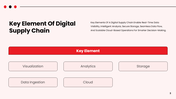
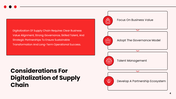
This deck fixes that by forcing a structured flow. It starts with a clear introduction, then moves into core elements: visualization, analytics, storage, data ingestion, and cloud. This sets the data foundation without overloading the discussion. It then shifts to execution decisions. The consideration slide focuses on business value, governance, talent, and partnerships. This helps align stakeholders before moving forward.
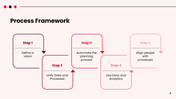
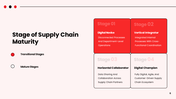
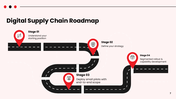
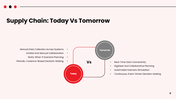
The process framework breaks transformation into five steps: define vision, unify data, automate planning, use analytics, and align people. This gives a usable path, not a theory. The maturity model shows four stages, from disconnected operations to a fully digital ecosystem. This helps teams assess their current position. The roadmap slide adds sequence with clear stages from understanding the starting point to rollout. The "today vs tomorrow" slide illustrates the shift from manual, periodic decisions to real-time, automated ones.
The design is clean. Red highlights key sections, and icons support each step without clutter. Use this deck to explain where you are, what changes, and how to move forward.
Features of this template:
- Edit all text, colors, and elements to match your internal model
- Use across PowerPoint, Google Slides, and Canva without layout issues
- Present in both 16:9 widescreen and 4:3 formats
- Data architecture layer covering visualization, analytics, storage, ingestion, and cloud
- Five-step process framework from vision to people alignment
- Supply chain maturity model with four defined transformation stages
- Roadmap slide with staged rollout from assessment to capability development
- Today vs tomorrow comparison showing shift to real-time, automated decision-making
You May Also Like These PowerPoint Templates
Showing36 of69,218 templates