Remote work has changed how teams connect. When your colleagues are spread across cities—or even continents —finding activities that actually bring people together takes a little more effort. That’s exactly why Virtual Family Feud has become one of the most popular team-building games for remote teams. It’s familiar, fast-paced, and surprisingly easy to run over a video call.
This guide walks you through everything you need to run it properly — from choosing your family feud presentation to keeping 30 people engaged on a Zoom call without chaos.
Why Virtual Family Feud Works for Remote Teams
Most virtual icebreakers feel forced. Family Feud doesn’t — because the format does the work for you. Teams compete, they debate answers, and they groan when the board reveals a response they missed. There’s natural energy built into the game itself.
For HR professionals and team managers, that matters. You’re not just filling 45 minutes on a Friday afternoon. You’re creating moments where people actually talk to each other outside of project updates and status meetings.
Using an interactive presentation tool makes it even better. Teams can submit answers, vote live, and see results instantly—keeping everyone engaged throughout the game.
What You Need Before You Start
Before your session, sort out these basics:
• A video conferencing tool — Zoom, Microsoft Teams, or Google Meet all work fine
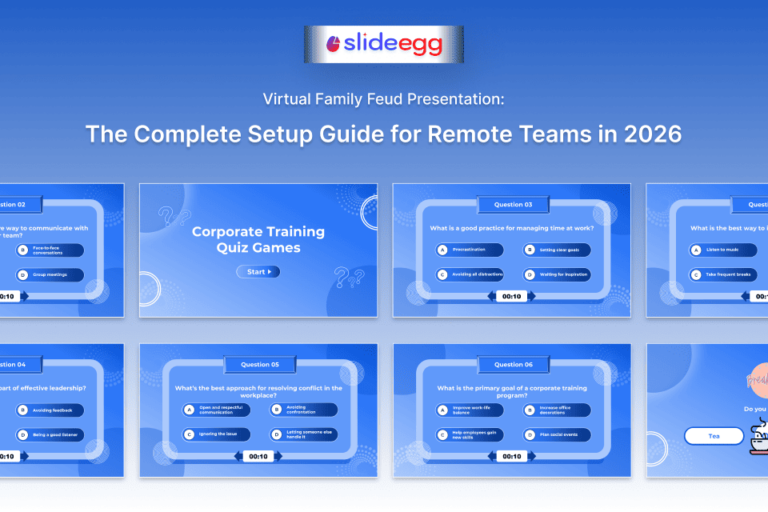
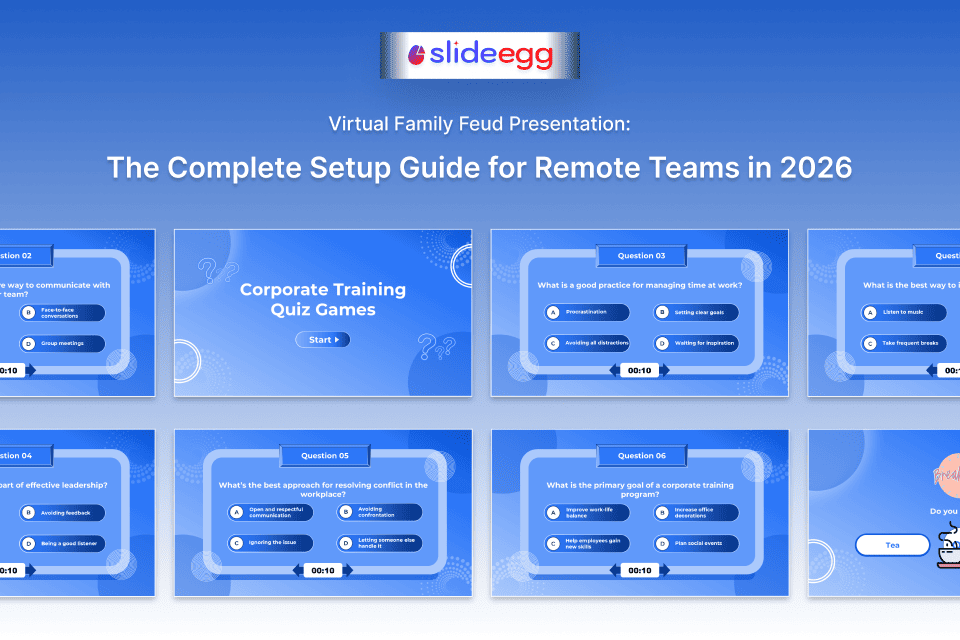
• A family feud presentation — either a PowerPoint or Google Slides deck built for the game
• A host — someone comfortable running the energy in the room
• Two teams — ideally 4 to 8 people per team
• A timer — 30 seconds per answer round keeps things moving
You don’t need any special software beyond what your team already uses.
Choosing the Right Family Feud Presentation
This is where most people spend too little time. A poorly designed slide deck kills the momentum. Squinting at tiny text or waiting for slides to load mid-game frustrates everyone.
Here’s what to look for:
| Feature | Why It Matters |
| Clear answer reveals animations | Builds suspense — audiences expect the dramatic flip |
| Editable answer slots | You need to customize questions for your team |
| Score tracker included | Saves you from keeping score manually |
| High contrast visuals | Readable on small laptop screens across different connections |
| Multiple rounds built in | Allows you to run a full game without rebuilding slides |
If you’re working with a tight timeline, a free PowerPoint template designed specifically for Family Feud is a practical starting point. Many are available online and come pre-built with the classic board layout, strike indicators, and score sections. You simply swap in your own questions.
For larger corporate events or company-wide sessions, a professional PowerPoint template gives you more polish — custom branding, smoother animations, and layouts that hold up well when screen-shared. It’s a small investment that makes the whole session feel intentional rather than thrown together.
Step-by-Step: How to Run Virtual Family Feud for Remote Teams
Step 1: Use ready-to-play questions
This is where most hosts waste time. If you call this a complete setup guide, you cannot leave the reader with “go create survey questions” and no usable examples.
Use ready-made questions so you can run the game immediately.
Ready-to-use question set:
Name something people do during a boring Zoom meeting
- Check phone — 35
- Turn camera off — 25
- Eat snacks — 15
- Multitask — 15
- Daydream — 10
Name a tool remote workers can’t live without
- Zoom — 30
- Slack — 25
- Google Docs — 20
- Microsoft Teams — 15
- Email — 10
Name a common work-from-home distraction
- Kids — 30
- Phone — 25
- TV — 20
- Pets — 15
- Social media — 10
Name something people forget to do in remote meetings
- Mute/unmute — 35
- Turn on camera — 25
- Share screen — 20
- Prepare notes — 10
- Join on time — 10
Name something people wear only for video calls
- Formal shirt — 40
- Blazer — 25
- Makeup — 15
- Accessories — 10
- Proper hairstyle — 10
Step 2: Divide participants into balanced teams
Use breakout rooms or assign teams before the call starts. Keep teams balanced so one group does not dominate. Give them simple names based on departments, cities, or team themes.
Step 3: Set up your slides and test screen sharing
Open your family feud presentation and run a quick practice round. Test screen sharing, confirm animations work, and ensure text is readable on both laptops and mobile devices.
Step 4: Explain the rules in under two minutes
Keep this short. Most people already know the format. Explain only what matters: answer if it’s on the board, points are awarded, three strikes pass control, and the other team gets a chance to steal.
Step 5: Keep the pace high
The host controls the energy. React to answers, move quickly between turns, and build tension during answer reveals. The slides support the game—the host drives it.
Step 6: End with a clear finish
Announce the final score, name the winning team, and leave a few minutes for informal conversation before ending the session.
Common Mistakes to Avoid
• Too many rounds — four rounds are plenty. Six feels like work.
• Questions that are too niche — not everyone knows internal company jargon. Keep it accessible.
• No practice run — test your slides on the same setup you’ll use. Animations that work locally sometimes break when screenshared.
• Forgetting mobile users — some team members join from phones. Make sure your slide text is large enough to read on a small screen by using high-contrast visuals
Final Thoughts
A Virtual Family Feud session works when the setup is simple, the questions are easy, and the host controls the pace.
You don’t need complex tools or long preparation. With the right family feud presentation and ready-to-use questions, you can run a session that actually keeps people engaged.
If the goal is real interaction—not forced participation—this format works because it is fast, familiar, and easy to execute.
Frequently Asked Questions
How many people can play Virtual Family Feud?
The sweet spot is 8 to 20 participants. Above 25, participation drops significantly. For larger groups, consider running multiple simultaneous games in breakout rooms.
Do I need a paid tool to run this?
No. A family feud presentation in PowerPoint or Google Slides, combined with your existing video call platform, is enough. Free templates are enough for basic sessions. Professional templates are better for branded or large-scale events.
How long does a typical session take?
Plan for 45 to 60 minutes, including introductions, the game, and a brief wrap-up. Four rounds are usually enough to keep the game engaging without making it repetitive.
Can I use this for client events or onboarding sessions?
Yes — with the right questions. For client events, focus on universally relatable topics. For onboarding, mix fun questions with light company-culture references to help new joiners feel included without feeling tested.
What if participants don’t know the game?
A 90-second explanation at the start is enough. The format becomes intuitive once the first question begins.