The first week of school does more than fill time before “real learning” begins. It sets the tone for routines, participation, classroom comfort, and student confidence. In elementary classrooms, those early days matter because students are not just adjusting to new lessons. They are adjusting to a new teacher, a new space, new expectations, and new social dynamics.
That is why structure matters immediately.
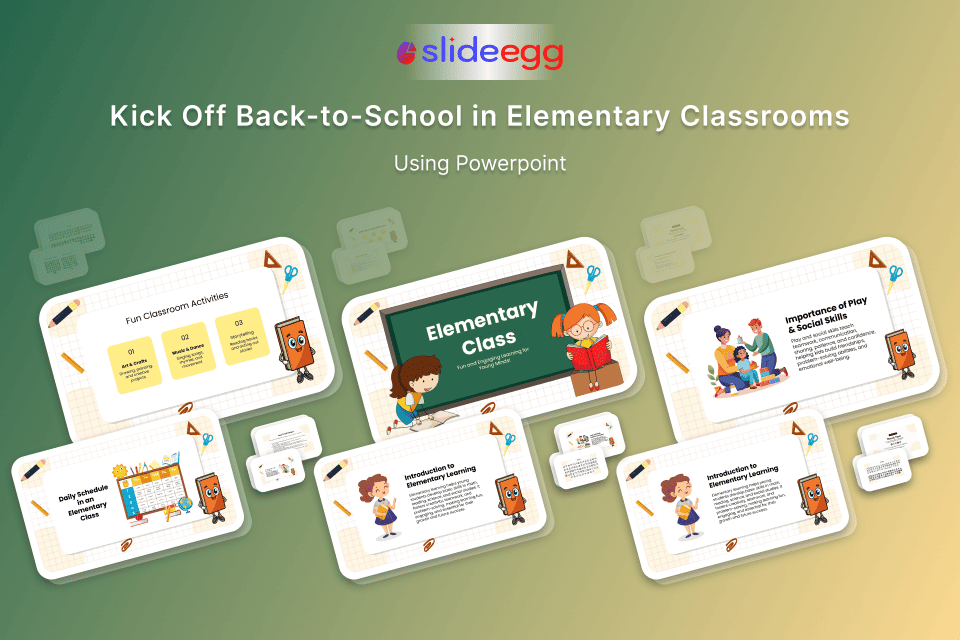
A simple, well-planned back-to-school PowerPoint template can help create that structure. Used correctly, it is not just a display tool. It becomes a visual support system that helps students understand what to do, what comes next, and how to participate. When routines, instructions, and activities are shown clearly, students feel more secure and teachers spend less time repeating directions.
The goal is not to impress children with flashy slides. The goal is to use clear visuals, readable text, and predictable layouts to reduce confusion and make the first week feel organized, welcoming, and manageable.
Below are 10 practical back-to-school activities you can run with PowerPoint to build connections, reinforce routines, and help students settle in with confidence.
1. All About Me Introductions
Use simple prompts like favorite hobby, proud moment, goal, or fun fact. This helps students share comfortably and lets classmates find common interests.
2. Classroom Discovery Hunt
Turn classroom rules into a movement activity by asking students to find key places like the homework area or supply station. This makes routines easier to remember.
3. Goal-Setting Activity
Ask students to set one academic goal and one personal goal. This builds ownership and helps them start the year with purpose.
4. Name Game Circle
Show directions for a simple name-sharing game, such as saying their name with a movement or favorite color. It helps students learn names and feel included.
5. Two Truths and a Wish
Students share two real facts and one wish. It is easy, creative, and less confusing than traditional guessing games.
6. Collaborative Classroom Contract
Let students help create class expectations under themes like respect, safety, and kindness. This builds shared responsibility instead of forced compliance.
7. Partner Interviews
Pair students with simple questions, then let them introduce each other. This reduces pressure and builds early connections.
8. Time Capsule Reflections
Students write or draw about their current strengths, challenges, and hopes for the year. Revisit it later to show growth.
9. Classroom Jobs Fair
Introduce classroom roles with short descriptions. This helps students understand responsibilities and feel part of the classroom community.
10. Community Circle Story
Start a class story and let each student add one sentence. It encourages listening, teamwork, and creativity.
Why PowerPoint Works So Well in the First Week
In elementary classrooms, students respond more confidently when instructions are visible, predictable, and easy to follow. During the first week, that matters even more because students are still learning routines, spaces, and expectations.
Using PowerPoint as a visual support tool can help teachers:
- Reduce repeated instructions
- Support smoother transitions
- Reinforce classroom routines
- Provide consistent visual cues
- Support different learning styles
Teachers can also use PowerPoint add-ons to make their slides more practical in the classroom. These tools help teachers quickly add icons, organize layouts, and include simple visuals that make instructions easier for students to understand.
The goal is not to make the classroom feel formal, but to create clarity during a week when students are still adjusting to routines. Slides with large fonts, simple visuals, and minimal text help students focus on what they need to do next and make daily activities easier to follow.
How to Adapt These Activities by Grade Level
Not all elementary students need the same level of support.
For K–2: Keep slides highly visual with fewer words. Use Kindergarten PowerPoint Templates which feature bright illustrations and playful characters, to keep students engaged.
For Grades 3–5, you can add more writing, partner discussion, and simple student-created slides. These students can handle a little more independence, but they still benefit from structure and visual clarity.
The activity itself does not always need to change. What changes is the level of independence you expect.
Final Thoughts
The first week of school is not about finishing every activity on your list. It is about building routines, emotional safety, and classroom connection.
When students know what to expect, they participate more confidently. When directions are clear, transitions become smoother. When early activities are structured well, the classroom begins to feel like a community instead of just a room full of unfamiliar faces.
Used intentionally, PowerPoint can support that process. It will not build classroom culture by itself, but it can make routines clearer, lower confusion, and help meaningful interactions happen more naturally.
That is the real value: not decoration, but structure that helps students feel ready to learn.
FAQ
1. How long should back-to-school activities last in elementary grades?
Most first-week activities work best in the 20–40 minute range. Younger students usually respond better to shorter, movement-based sessions.
2. What if students are too shy to participate?
Do not force public speaking immediately. Offer alternatives such as drawing, writing, partner sharing, or small-group discussion.
3. Can PowerPoint really improve classroom management?
Yes. When routines and instructions are displayed clearly, students are less likely to feel confused and more likely to transition smoothly.
4. How do I keep presentations from becoming boring?
Use one clear instruction at a time, limit text, keep visuals simple, and involve students through movement, discussion, or response-based activities.
5. Should I use the same activities every year?
Yes. Strong first-week routines are repeatable. You can keep the structure and refresh the prompts to match each new class.