You have done the hard work. You found the prospect, had the first conversation, and earned yourself a meeting. Now you have one shot to show them what working with you actually looks like. That is exactly what a business proposal presentation is for.
A proposal presentation is not just a summary of what you offer. It is a structured story that takes the client from where they are now to where they want to be, and positions you as the person who can get them there. Get it right, and deals move forward. Get it wrong, and even a great service can lose to a weaker competitor with better slides.
This guide walks you through what to include, how to structure it, and what small details make a real difference in 2026.
Why Your Proposal Presentation Matters More Than You Think
- Many professionals treat the proposal as a formality. They paste in a scope of work, add a price, and call it done. But clients are not just evaluating what you are offering.
- They are evaluating whether they trust you enough to hand over their budget and time.
- Your presentation is your first real chance to show them how you think, how you communicate, and whether you understand their situation.
- A clear, confident, well-organized proposal answers those unspoken questions before they are even asked.
- Clients often decide in the first five minutes whether they feel good about a proposal.
- The content matters, but the first impression sets the tone for everything after it.
6 Key Benefits of a Well-Structured Proposal Presentation
| Benefit | Why It Matters to Your Audience |
|---|---|
| Builds instant trust | Clients decide fast. A clean, well-structured proposal tells them you are serious and prepared before you say a word. |
| Makes the problem clear | When clients see their challenge laid out clearly, they feel heard. That sets the tone for everything that follows. |
| Keeps the conversation focused | A good proposal stops meetings from going off track. Everyone knows what is being discussed and why. |
| Separates you from competitors | Most proposals look the same. A thoughtful design and clear message make yours stand out in a shortlist. |
| Speeds up decisions | Decision-makers are busy. A proposal that answers questions before they are asked shortens the approval process. |
| Gives you something to reference | During Q&A, your slides keep the conversation anchored. No need to scramble for information mid-meeting. |
What to Include: A Slide-by-Slide Breakdown
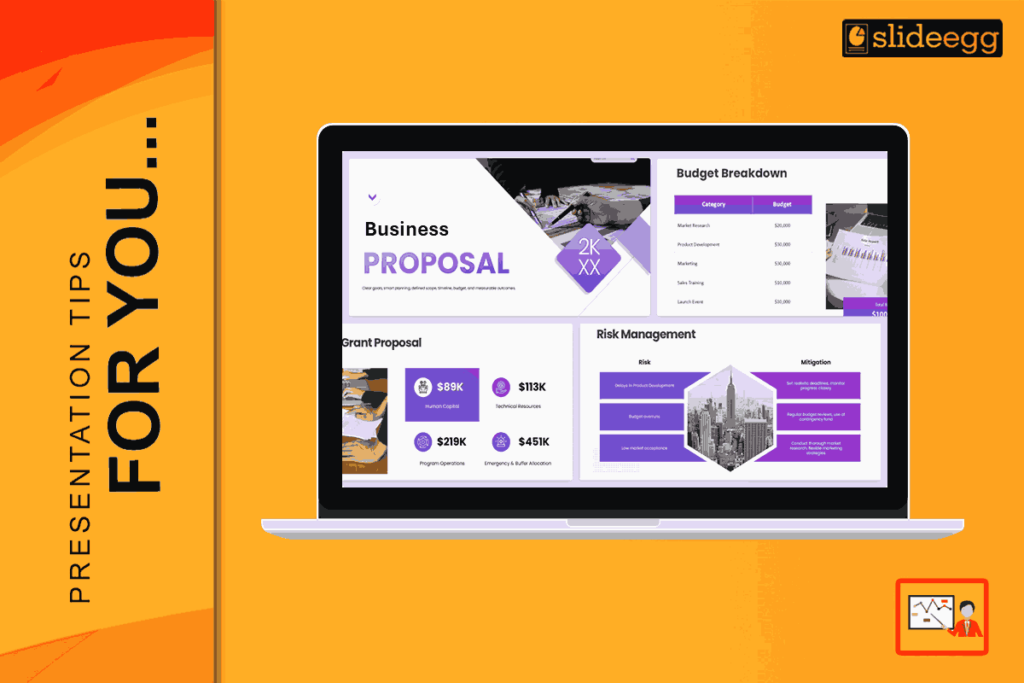
Here is a simple structure that works across most industries. You do not need anything fancy. You need the right information in the right order.
| Slide | What to Include | Keep It To |
|---|---|---|
| Cover Slide | Your name, company, client name, date | 1 slide |
| The Problem | What challenge is the client facing right now | 1 to 2 slides |
| Your Solution | How do you solve that challenge, in plain terms | 2 to 3 slides |
| Why You | Your relevant experience, past results, or credentials | 1 to 2 slides |
| Pricing | Clear breakdown, no hidden costs | 1 slide |
| Timeline | Key milestones and delivery dates | 1 slide |
| Next Steps | What happens after this meeting | 1 slide |
Keep the total to 10 to 12 slides. Decision-makers are busy. A focused proposal that respects their time reads better than a thorough one that loses them halfway through.
A Real-World Example to Learn From
Imagine a marketing consultant pitching to a retail brand that has been struggling with low online sales. Here is how a strong proposal might open:
Slide 1 (Cover): The consultant’s name, company logo, the client’s brand name, and the date.
Slide 2 (The Problem): ‘Your website is getting traffic, but fewer than 2% of visitors are buying. That gap is costing you roughly $40,000 in missed revenue each month.’
Slide 3 (The Solution): A three-point plan covering page redesign, retargeting ads, and email follow-up sequences.
Slide 4 (Why Us): A brief case study where the same approach lifted another client’s conversion rate from 1.8% to 4.3% in 90 days.
Notice what this does. The client’s specific problem is named early, in numbers they recognize. The solution is tied directly to that problem. The past result is concrete and comparable. That is a proposal that earns trust quickly.
Final Thoughts
A strong business proposal presentation is not about having the best design or packing in the most detail. It is about proving that you understand the client’s situation clearly and have a practical plan to solve it. Start with their problem, lead into your solution, support it with proof, and make the next step easy to understand.
If you are short on time, use a clean proposal structure and focus most on the problem and solution slides. You can also use an interactive presentation tool to make the discussion more engaging, highlight key points clearly, and keep the client involved instead of making them sit through a one-sided pitch. That keeps attention high and helps your message land with more impact.
FAQ
1. What is the best way to explain a solution in a proposal presentation?
Keep the solution simple and focused on how it solves the problem. Avoid technical jargon and explain the benefits clearly.
2. How detailed should the financial section be in a proposal presentation?
Focus on the key numbers such as estimated costs, projected revenue, and expected ROI. The goal is to highlight the financial impact without overwhelming the audience with too much data.
3. How can you clearly show the value of your proposal?
Explain how your solution solves a real problem and what results it can deliver. Use simple examples, projections, or case scenarios to make the impact clear.
4. How can you make a proposal presentation more impactful in 2026?
Focus on clarity, storytelling, and audience relevance. Modern proposals stand out when they connect the idea directly to business outcomes and real-world impact.
5. What is the best way to end a business proposal presentation?
End with a clear summary of the value and a strong call to action. This helps guide the audience toward the next step or decision.