In 2026, the best business plans are defined by clear facts and strategic density, not long, boring pages. Whether you are seeking a bank loan or venture capital, you need a simple map that proves your business can grow while staying financially healthy.
Here is a detailed look at 10 industry blueprints, matched with professional layouts from our business plan PowerPoint templates collection to help you succeed.
1. Tech & AI Startups
- The Strategy: Focus on “Agentic Orchestration.” This means using AI agents to handle 80% of routine tasks so you can scale without hiring too many people too fast.
- The Goal: Use your slides to show a “Wedge Strategy.” Clearly explain how you will win your first small group of customers in the first 180 days.
- The Detail: Investors want to see a technical roadmap. Explain how you will protect your ideas with patents or copyrights to build a “moat” around your business.
- Key Number: Aim for a Rule of 40 score (Growth % + Profit %) higher than 40% to prove you are a top-tier startup.
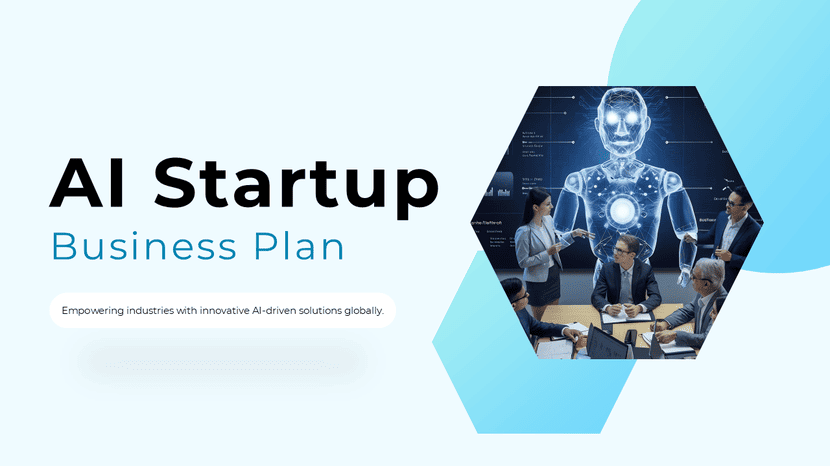
- Template: AI Startup Business Plan. This layout provides specialized tech-stack nodes and technical roadmap frameworks to visualize your AI-first headcount and intellectual property.
2. SaaS (Software as a Service)
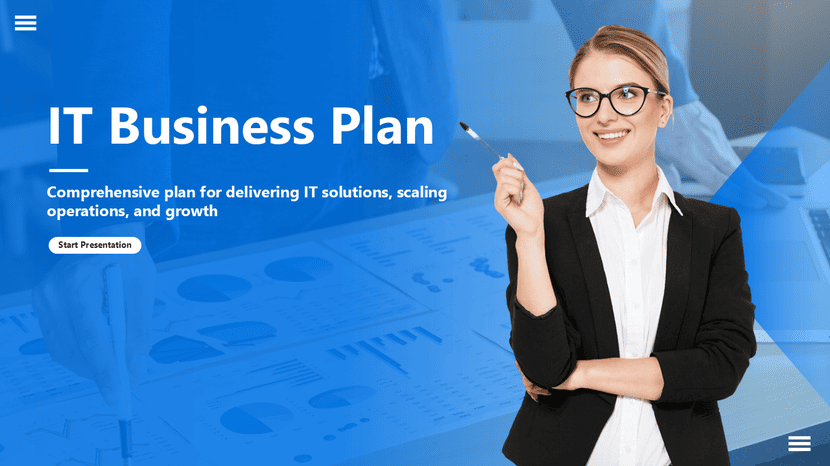
- The Strategy: Shift your focus from finding new customers to keeping the ones you have. High “Net Revenue Retention” is the goal for 2026.
- The Goal: Prove that each customer is worth at least 3x more than what it costs to find them (the LTV/CAC ratio).
- The Detail: Explain your product’s lifecycle. Focus on the real results users get instead of just listing technical features.
- Key Number: Try to pay back your marketing and sales costs in less than 10 months to stay capital-efficient.
- Template: IT Business Plan. It features high-density data dashboards and case study slides to quantify ROI and prove product-market fit to risk-averse stakeholders.
3. Retail & E-commerce

- The Strategy: Optimize your digital presence for “Zero-Click” search. Make it easy for people to find and buy from you on new AI search engines.
- The Goal: Explain your shipping plan. Show how you will use automated systems to keep your inventory costs low and turnover high.
- The Detail: Include a section on your supply chain. Show how you will fulfill orders fast to keep your 2026 customers happy.
- Key Number: Watch your “Contribution Margin.” Ensure you make a profit of at least 25% on every single item sold after all costs.
- Template: Truck/Logistics Business Plan. This deck includes supply chain flowcharts and inventory management diagrams that bridge the gap between back-end logistics and customer delivery.
4. Consulting & Professional Services
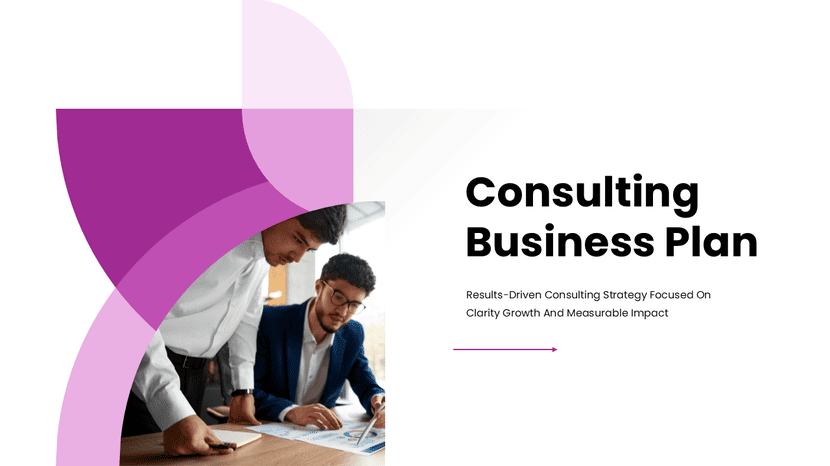
- The Strategy: Focus on “Revenue-per-Employee.” In 2026, profit comes from leverage, not just adding more consultants.
- The Goal: Use automation for boring office tasks. This lets your team focus on high-value expert work that clients will pay a premium for.
- The Detail: Highlight the “Entity Authority” of your team. Showcase the deep expertise and unique skills that make your firm the only choice.
- Key Number: Try to make 2x more money per person than the average company in your field (target >$350k per employee).
- Template: Consulting Business Plan. It offers structured frames for SWOT analyses and management charts to establish a formal professional order and build immediate client trust.
5. Cafes & Restaurants
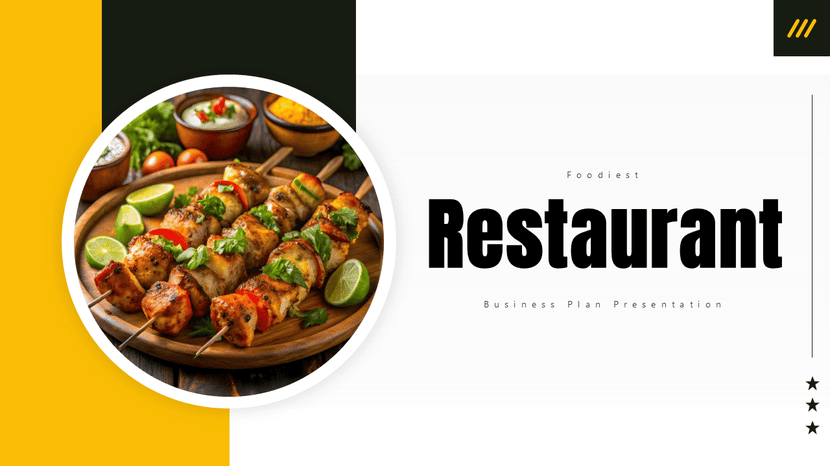
- The Strategy: Use local data to pick the perfect spot. Find a place with high foot traffic that fits your specific niche.
- The Goal: Show you understand your neighborhood. Explain who lives there and what their daily habits look like.
- The Detail: Provide details on your physical site. Include info on street visibility, parking, and how you will beat local competition.
- Key Number: Keep your “Prime Costs” (Food + Labor) at or below 55%. In a $20/hr labor market, this is the only way to survive.
- Template: Coffee Shop/Restaurant Plan. This template features vibrant infographics for menu highlights and location mapping to engage investors with the visual “soul” of your hospitality concept.
6. Real Estate & Property Management
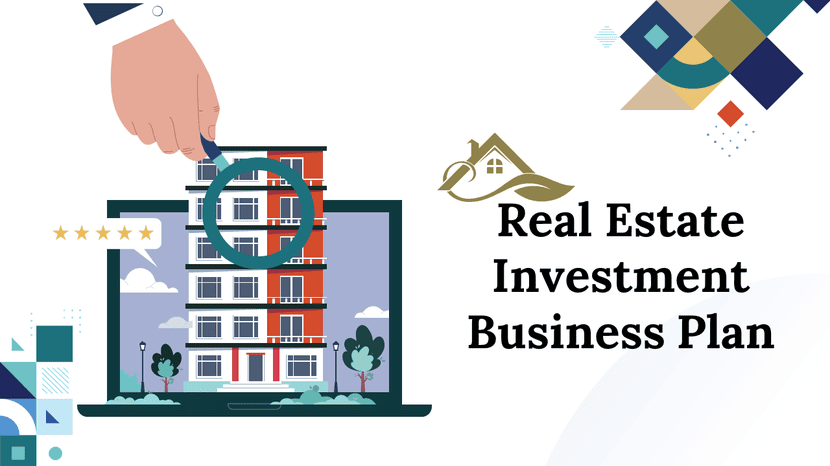
- The Strategy: Create a “Stress Test” for your plan. Show how your cash flow stays positive even if interest rates change.
- The Goal: List your assets and the tech tools you use. Show how you manage buildings efficiently to keep tenants happy.
- The Detail: Include a five-year profit forecast and a clear exit strategy for your investors.
- Key Number: Show a Debt Service Coverage Ratio (DSCR) of at least 1.25x. This proves to lenders that you can always pay back your loans.
- Template: Real Estate Business Plan. This design provides clean, geometric layouts and detailed financial reporting slides to present complex multi-year property projections with clarity.
7. Media Production
- The Strategy (Content Amortization): Treat every production as a capital asset rather than a one-time expense. You must model a 24-month Content Lifecycle, showing how assets are repurposed across multiple platforms to maximize the return on every dollar spent.
- The Goal (Production Velocity): Demonstrate how your workflow utilizes Agentic Video Editing and AI-first pre-production to reduce “time-to-market”. Show that you can scale content volume without a linear increase in expensive studio headcount.
- The Detail (Technical Infrastructure): Detail your plan for Capital Expenditure (CapEx) regarding high-end rendering hardware and server storage. Proving a proactive maintenance and upgrade cycle ensures investors you won’t be hit with sudden “emergency” tech bills.
- Key Number: Target a Gross Margin of >50% on all production contracts and a Break-Even Point achieved within the first 30% of a project’s lifecycle.
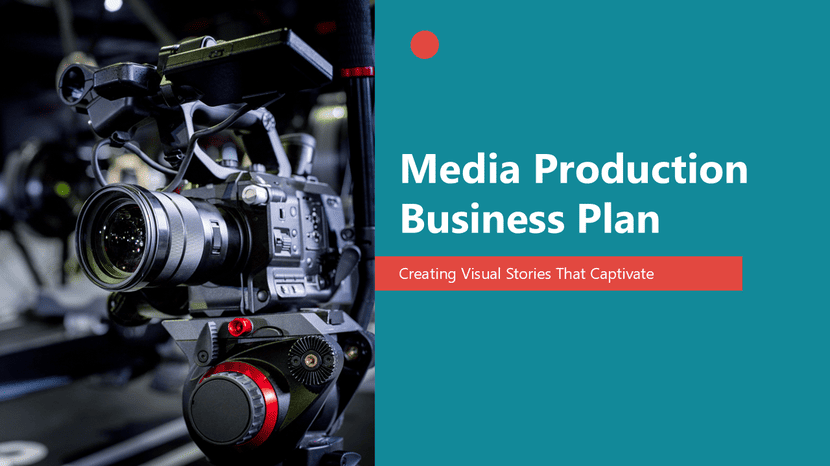
- Template: Media Production Business Plan. This layout utilizes technical vector graphics to map high-variable-cost operations and equipment lifecycles in an easy-to-digest format.
8. Nonprofit Organizations
- The Strategy: Tell a powerful story about impact. Show exactly how your programs change lives in the community.
- The Goal: Create a roadmap for diversified funding. Include plans for grants, big donors, and community events to ensure steady cash flow.
- The Detail: Focus on transparency. Show that you have 6 months of cash on hand to survive any funding gaps.
- Key Number: Aim for a “Program Expense Ratio” of at least 85%. This proves that most money goes directly to your mission.
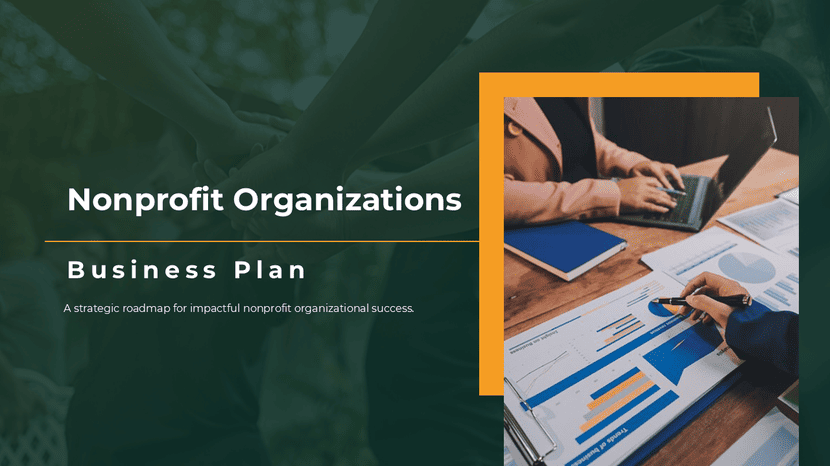
- Template: Nonprofit Business Plan. This template replaces standard profit metrics with “Return on Impact” slides and emotionally resonant storytelling layouts.
9. Gyms & Wellness Centers
- The Strategy: Use member data to stop “churn.” Track attendance to find and help members who are at risk of quitting.
- The Goal: Target new members based on their lifestyle. Focus on people whose habits align with your specific fitness programs.
- The Detail: Outline your staff training. In 2026, the “Customer Experience” is what prevents people from switching to a competitor.
- Key Number: Ensure your “Average Revenue Per Member” includes at least 25% from non-dues sources like personal training or retail.
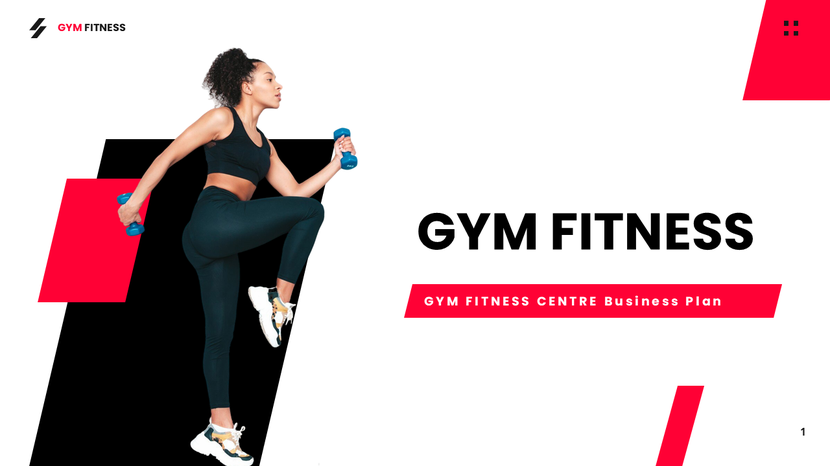
- Template: Gym/Fitness Business Plan. Designed with high-energy themes and equipment icons, it helps professionals visualize a modern, automated health studio vision.
10. Education & EdTech
- The Strategy: Use modular course designs. This lets you teach thousands of students at once without losing quality.
- The Goal: Show how you track student success. Investors want to see that students are actually learning and finishing your courses.
- The Detail: Explain your “Content Amortization.” Treat your curriculum as an asset that you update and reuse over a 24-month cycle.
- Key Number: Target a “Course Completion Rate” of over 70% to drive high renewal and referral rates.
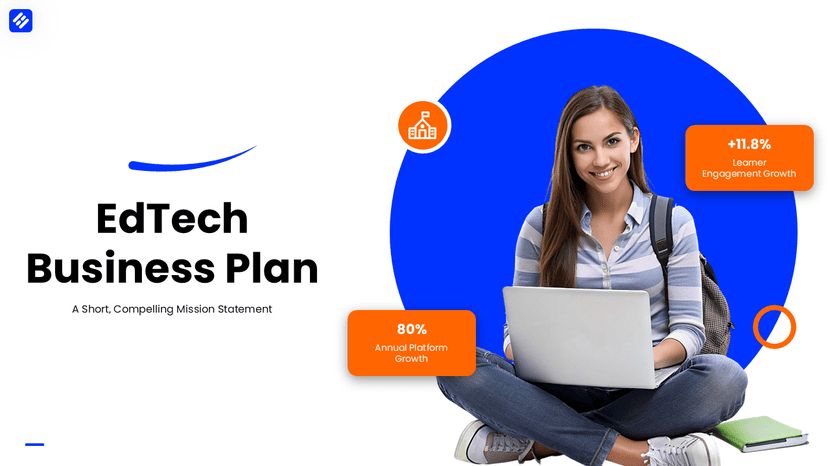
- Template: EdTech Business Plan. This deck provides student success tracking charts and modular curriculum roadmap slides to illustrate scalable learning growth.
Common Questions
1. Why use industry-specific templates?
General templates often miss the specific math (like “Prime Cost” for cafes) that experts look for.
2. How long should my plan be?
In 2026, a high-density 10-page document is the gold standard for executive summaries.
3. What is the Rule of 40?
It’s a simple health check. If your Growth % plus your Profit % equals 40 or more, your business is performing well.
4. Do I need to mention AI?
Yes. Showing how you use technology to keep your “Burn Multiple” low is a major signal of professional maturity.
Conclusion: Precision Over Volume
The era of the 50-page, text-heavy business plan is over. In 2026, professional maturity is demonstrated through strategic density and the ability to hard-code your industry’s specific economic logic into every slide. Whether you are implementing Agentic Orchestration in a tech startup or maintaining a strict 55% Prime Cost in a restaurant, your success depends on presenting these benchmarks with absolute clarity.
By matching these non-negotiable 2026 standards with high-impact, strategic business plan templates, you transform your vision into a professional roadmap that stakeholders can trust. Don’t just present a plan—present a validated engine for growth!