Two logistics vendors can look identical on paper—same routes, similar pricing, same promises. The real difference appears when you ask for a company profile. One gives you a clear, well-structured document that explains capacity, coverage, processes, and accountability. The other sends a brochure filled with slogans and photos.
That difference matters. Procurement and supply chain teams are not choosing a vendor based on nice words. They are trying to understand whether the company can deliver consistently, handle problems when they arise, and meet operational and compliance expectations. A strong logistics company profile does that job well. When it is built with a clear company profile PowerPoint template, the information becomes easier to follow, easier to assess, and easier to trust.
This guide explains what B2B buyers look for in a logistics company profile and why the way that information is presented can shape the decision just as much as the service itself.
Why the Company Profile Matters More Than You Think
Procurement decisions in logistics are high-stakes. A wrong vendor choice can delay shipments, damage client relationships, and create serious operational headaches. B2B buyers do not have time to waste on vague promises and surface-level pitches.
A well-prepared logistics company profile answers the most important questions before they are even asked. It signals preparedness, professionalism, and operational maturity. When a logistics company cannot put together a clear profile, that itself is a red flag.
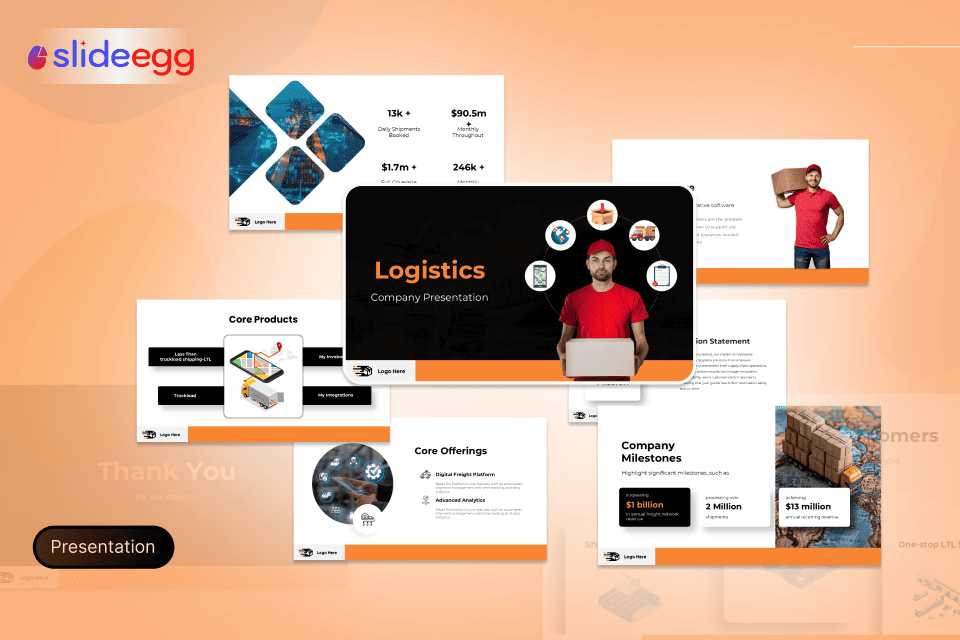
Using a company PowerPoint template helps you present the information in a clean, structured way—so buyers can quickly scan coverage, capacity, process, and compliance without digging through clutter.
Fact: Industry research consistently shows that a large portion of vendor evaluation happens before any direct sales conversation, meaning your profile and pre-meeting materials heavily influence whether you get shortlisted. Your profile is often the deciding factor in whether you make that list.
Key Features B2B Buyers Look for in a Logistics Company Profile
Here are the core elements that matter most to procurement professionals when evaluating a logistics company profile.
| Feature | What Buyers Want to See |
| 01 | Clear Company Overview: Who you are, when you were founded, what you specialize in, and the geographic regions you serve. No vague generalities. |
| 02 | Service Scope and Specialisations: A specific breakdown of services: freight forwarding, last-mile delivery, cold chain, customs brokerage, warehousing, or 3PL (Third-party logistics). Buyers need to match their needs to your offering fast. |
| 03 | Operational Data and Capacity: Fleet size, warehouse square footage, shipping volume handled per month, and number of routes or lanes. Real numbers matter here. |
| 04 | Technology Integration and Data Ecosystem: Buyers want to see how your TMS (Transportation Management System) integrates with their ERP systems (SAP, Oracle, etc.), whether you support API and EDI connectivity, how data flows between platforms, and how shipment updates are automated in real time. In 2026, tracking is not enough. Buyers expect predictive analytics that forecast delays before they occur. Strong logistics profiles now include AI-based delay prediction accuracy rates, route optimization metrics, and exception reduction percentages. |
| 05 | Compliance and Certifications: ISO certifications, customs compliance, industry-specific licenses, and safety records. These are non-negotiable for regulated industries. |
| 06 | Client Portfolio and Case Studies: Industries served, notable clients (with permission), and specific outcomes. This is where proof replaces promise. |
| 07 | Team and Leadership Credentials: Key personnel, their experience, and the strength of your operations team. B2B buyers are buying the people as much as the service. |
| 08 | Scalability and Disruption Workflow: Documented backup carrier network, peak-volume handling limits, and a visual disruption-response process (delay detection, automated alerts, reallocation, ETA update, post-incident report). |
| 09 | ESG & Carbon Reporting: Scope 1–3 emissions tracking, carbon-per-shipment reporting, fuel optimization initiatives, and sustainability data dashboards. Enterprise buyers now require logistics partners to support their ESG reporting obligations. |
An Example That Illustrates the Difference
Imagine a procurement manager at a retail company is looking for a logistics partner to handle nationwide distribution. She shortlists three vendors and requests their company profiles.
| Vendor A Profile (Weak) | Vendor B Profile (Strong) |
| Says: experienced logistics company | States: 14 years in retail distribution |
| No fleet or warehouse data listed | 500+ vehicles, 12 distribution hubs |
| No certifications mentioned | ISO 9001, GDP-certified cold chain |
| Generic client list | Served 3 top-10 national grocery chains |
| No technology section | TMS is integrated via API and EDI with SAP/Oracle ERP systems, enabling automated shipment updates, invoice reconciliation, and exception alerts. |
| No contingency planning was mentioned | Documented backup carrier network and B2B Logistics Marketing Plan & Profile Guide standards. |
Vendor B gets the callback. Not because they are necessarily better at logistics, but because their profile proves they understand what a B2B buyer needs to know before making a decision.
Key insight: A strong logistics company profile does not just describe what you do. It answers the questions a procurement manager has before they even ask them.
Benefits of Evaluating a Logistics Company Profile Thoroughly
For B2B buyers, spending time reviewing a logistics company profile before engaging is not extra work. It is a smart shortcut that saves far greater time and cost down the line.
• Reduces vendor evaluation time by filtering out unsuitable providers early
• Reveals operational maturity before any contract negotiation begins
• Exposes red flags such as missing certifications, vague service descriptions, or absence of client references
• Helps align logistics capabilities with your specific industry requirements
• Builds confidence in shortlisted vendors before investing in site visits or demos
• Provides a documented basis for internal justification when recommending a vendor to leadership
• Sets clear expectations about service scope, reducing misunderstandings after onboarding
What a Strong Logistics Company Profile Looks Like in Practice
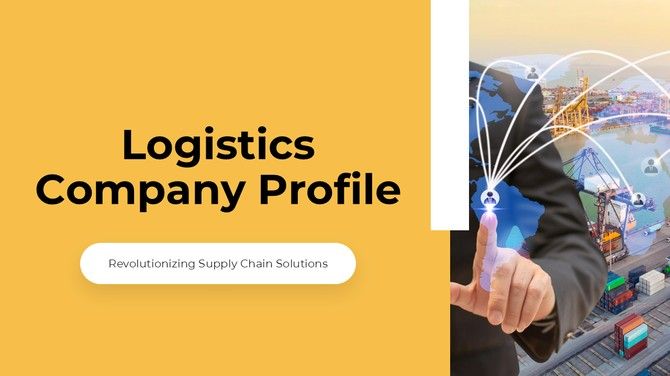
When a logistics company truly understands its B2B audience, its profile reflects that. Here is what separates a polished, high-trust profile from a generic one.
Company Overview
Instead of saying we are a leading logistics provider, a strong profile says: Founded in 2009, we specialize in temperature-controlled pharmaceutical distribution across 28 states, managing over 4,000 shipments per month with a 99.2% on-time delivery rate.
Services Section
Rather than listing services as freight, warehousing, and delivery, a strong profile breaks each service into a short description with the specific use case it solves and the industries it serves best.
Case Study
Challenge: A national electronics retailer needed to reduce last-mile delivery times by 30% during peak season. Solution: We implemented zone-skipping with dynamic route optimization. Result: 34% reduction in delivery time, zero stockouts during the holiday period. Supported by a route optimization algorithm and predictive demand modeling.
Final Thoughts
Choosing the right logistics partner is one of the most consequential decisions a procurement team makes. Delays, damages, and compliance failures all flow directly from that choice. A thorough logistics company profile is the first filter in a process that needs to get it right.
As a B2B buyer, you should expect specificity, transparency, and proof. Not marketing language. Not vague claims. Real numbers, real certifications, real results, and a clear picture of how this company operates day to day.
The best logistics partners understand that. And their company profile shows it from page one.
Frequently Asked Questions (FAQ)
1) How long should a logistics company profile be?
For B2B buyers, keep it to 10–15 slides/pages so it’s fast to scan. Make each section short, with clear headings and proof points.
2) What is the most important section for a B2B buyer?
Buyers look first for capacity/operational data, compliance certifications, and real client proof. If those are weak or missing, the rest doesn’t matter.
3) Should a logistics company include pricing in its profile?
Don’t put full pricing in the main profile—save it for after qualification. Instead, mention your pricing approach (per shipment, contract, volume tiers) to set expectations.
4) How often should a logistics company update its profile?
Update it at least twice a year, and immediately after major changes. Old fleet, routes, or certifications can hurt trust more than having no profile.
5) What format works best for sharing a logistics company profile with B2B buyers?
A hybrid approach works best. Provide a concise PDF executive summary for quick review, but include a link to a secure live dashboard or digital data room where buyers can view real-time performance metrics, capacity updates, and compliance documentation.