Crowdfunding Presentation Template For PPT And Google Slides







Crowdfunding Presentation Template
Crowdfunding is not just a funding method. It is also a market signal. A campaign can show whether people are willing to support an idea, how early traction builds, and what kind of value proposition gets attention. That is why a crowdfunding presentation needs to do more than define the term. It should help explain the model, the funding options, the advantages, and the risks in a way that supports real business discussion.
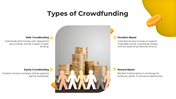
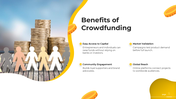
This deck is useful for that job because the slide flow stays close to the questions professionals actually need to answer. It covers the main types of crowdfunding, including debt, equity, donation-based, and reward-based models. It also explains the benefits of crowdfunding, such as access to capital, market validation, community engagement, and wider reach. Just as importantly, it addresses the harder side of the subject by covering campaign risk, competition, delivery pressure, and trust issues. That balance makes the content more credible.
The structure is practical for startup reviews, internal strategy discussions, investor-facing context slides, accelerator programs, business workshops, and funding overviews. One part of the deck helps explain how crowdfunding works. Another helps frame when it makes sense, what value it offers, and where the limits appear. That makes the presentation useful for decision-making, not just awareness.
The layout supports quick reading. Large headings, short sections, and clear visual grouping keep the topic easy to follow. Use this template when you need to explain crowdfunding in a format that is direct, structured, and ready for professional use.
Features of this template:
- Fully editable crowdfunding slides.
- Available in 16:9 and 4:3 formats.
- Compatible with PowerPoint, Google Slides, and Canva.
- Covers debt, equity, donation-based, and reward-based crowdfunding.
- Includes slides on benefits, challenges, and conclusion.
- Useful for startup planning, funding discussions, business reviews, and workshop presentations.
- Helps explain both opportunity and risk in one presentation flow.
- Designed for professional discussion, not classroom-style explanation.
More Collections for Crowdfunding Presentation Template For PPT
Recommended based on this template.
Similar Templates to Crowdfunding Presentation Template For PPT
Showing36 of69,218 templates